
Peacevent — A Story of Inventing Peace in Kashmir
In Kashmir, conflict has been a part of daily life, shaping how young people are growing up. Peace can feel more like a privilege than a right. PPA alumni, Irfan Pullani and Owais Amin Khan are helping young people reclaim hope, agency, and the power to shape their communities. Irfan brings an outsider’s perspective, years of listening and research, and a commitment to creating platforms for Kashmiri voices. Owais brings the lived experience of growing up in Pulwama and a deep sense of responsibility to the people and place he calls home. Together, they created Peacevent - meaning “to invent peace” -a youth leadership initiative that equips emerging peacebuilders to turn reflection into community action. For Irfan and Owais, the true value of the work is what continues beyond the program: young people launching initiatives of their own to build peace in their lives and in their communities. As they put it simply, “The ripple was the point.”
We interviewed Irfan and Owais to learn more about the experiences that shaped their paths into peacebuilding, the trust that brought them together, and their vision for Kashmir’s future. We invite you to discover how their lived experiences and perspectives complement their vision and gave rise to the Peacevent initiative. How creating space for young people to be heard can awaken hope, agency, and action? We hope their story inspires you to consider what ripple of peace you might set in motion within your own community.
Part 1
Background: Irfan
Do you consider yourself a peacebuilder? Why or why not?
Yes, and the reason begins with a belief rather than a biography.
I believe peace is the most fundamental privilege a human being can have. Not comfort, not success, not even happiness in every instance, but peace. The capacity to live without fear, to think without threat, to build without the ground being pulled from under you. When I say privilege, I mean it fully: something not everyone is born into, something that can be taken away, something that requires active conditions to exist and active effort to protect. In many parts of the world, and certainly in Kashmir, peace is not a backdrop. It is an achievement: fragile, contested, and deeply personal.
My formal path ran through a law degree from the University of Delhi, and then through a Masters in International Law and Dispute Settlement at the UN University for Peace in Costa Rica. But the conviction behind this work was never institutional. It preceded every degree.
How did you find yourself involved in your current work / peacebuilding work?
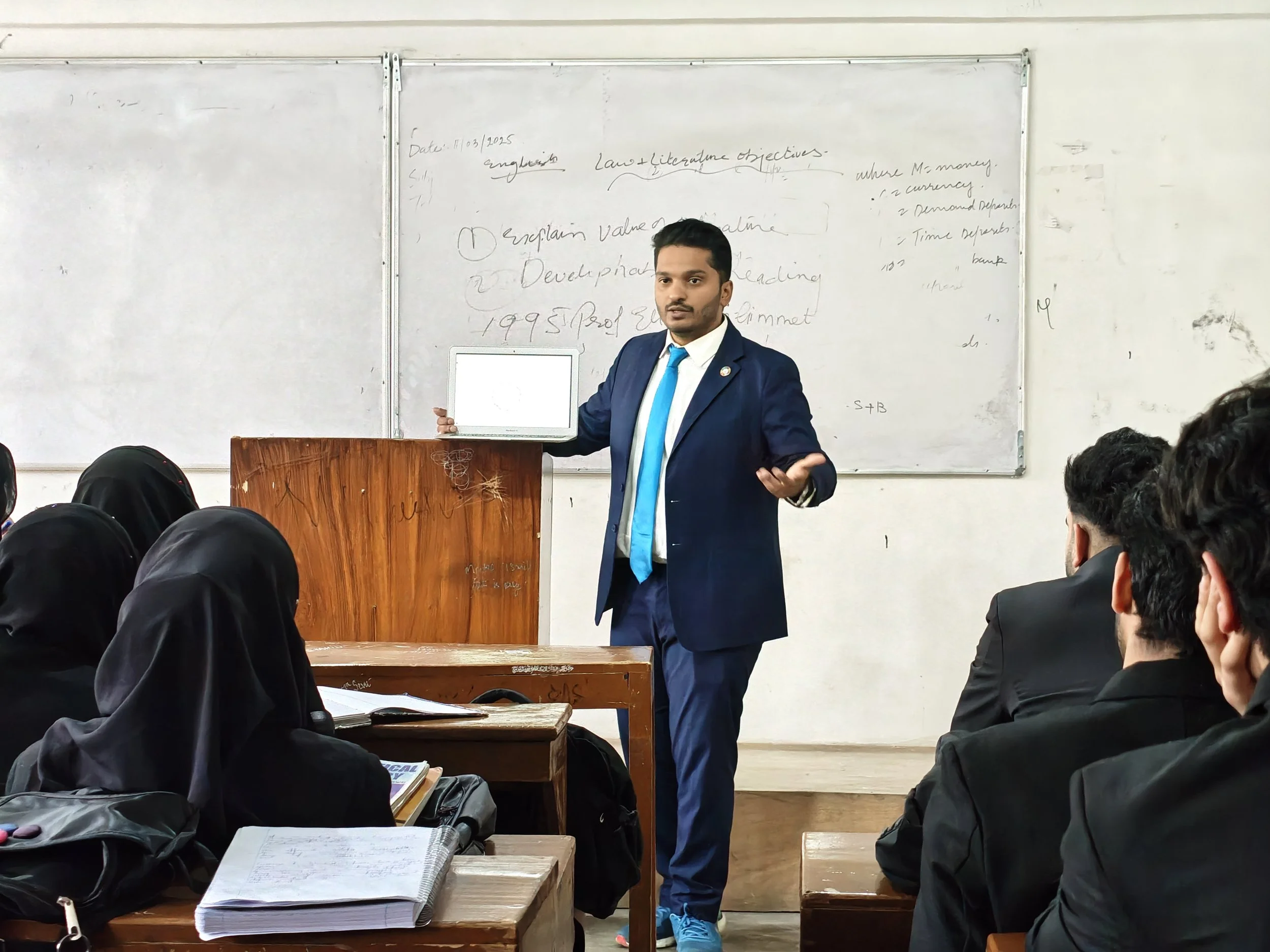
In August 2019, Kashmir's special status was removed by an act of Parliament. On the law school campus in Delhi, the debate was constitutional and largely abstract, until a classmate walked very fast down the veranda, not running but trying to. Her father had undergone surgery in Srinagar the previous day. A communication blackout meant she had no way of knowing whether he had survived. In that moment, the debate acquired a human face.
I had grown up in Abu Dhabi, from a Kerala family, with no inherited position on Kashmir. Growing up in a state where a communication blackout of that kind was simply unimaginable, where the peace and stability that Kerala takes for granted would never be imposed upon overnight, made what was happening in Kashmir feel all the more stark. It was the same country, the same people, and yet entirely different realities. That contrast would not leave me.
So I went. Over the years that followed, I was captivated not only by Kashmir's extraordinary landscape but by the warmth and complexity of its people. I interviewed over a thousand families during the COVID lockdown period, conversations that gave me perspectives no classroom had offered: different generations, different understandings of what Kashmir is, why it hurts, and what its people hope for. That fieldwork became Kashmir Journal, a sustained documentation of voices, stories, and realities that the dominant narrative rarely captures.
Who or what inspired you? Do you have an origin story or a moment when you saw your path in peace?
The defining moments were human, not institutional.
The first was the classmate in the corridor in August 2019. Her face was the moment Kashmir stopped being a debate and became a responsibility.
The second came shortly after. I arrived in Srinagar with no plan, when most outsiders were staying away. A local boatman on Dal Lake offered me shelter before asking why I was there, and after a quiet cup of noon chai simply said: "Then eat." That hospitality, extended without condition to a stranger from the outside, shaped how I have understood trust, and peace, ever since.
The intellectual conviction came from UPEACE in Costa Rica, a country that abolished its military in 1948 and built its identity around education, ecology, and human development instead. Living there, I saw concretely what a society looks like when it decides that human development is worth more than military spending. That experience became part of my bones. Studying alongside peers from conflict-affected countries, I began to see that the most durable peace does not come from agreements alone. It comes from development: from communities having rights, resources, and the conditions to build their own futures.
As you faced challenges, what helped you move forward in your path?
Being an outsider was, and in many ways remains, the greatest challenge. Working in Kashmir without being Kashmiri means navigating skepticism, earning trust slowly, and accepting that there are rooms you will never fully enter.
During one session in the first edition of Peacevent, a fellow stopped me mid-sentence. The privilege of not being Kashmiri, he said, was precisely what allowed me to speak about Kashmir at world forums, at the United Nations and other international spaces. He was right. My role was never to speak for Kashmir. It was to build the platforms where Kashmiri voices could be heard.
That distinction, between speaking for and building platforms for, has been the most important clarification of my work. The outside lens is not a weakness to apologise for. It is a specific kind of responsibility: to use the access it provides in service of voices that do not have the same access, and to step back whenever those voices are ready to occupy the space themselves.
Kashmir did not ask me to come. I came anyway, and I have not left since.
Part 1
Background: Owais
Do you consider yourself a peacebuilder? Why or why not?
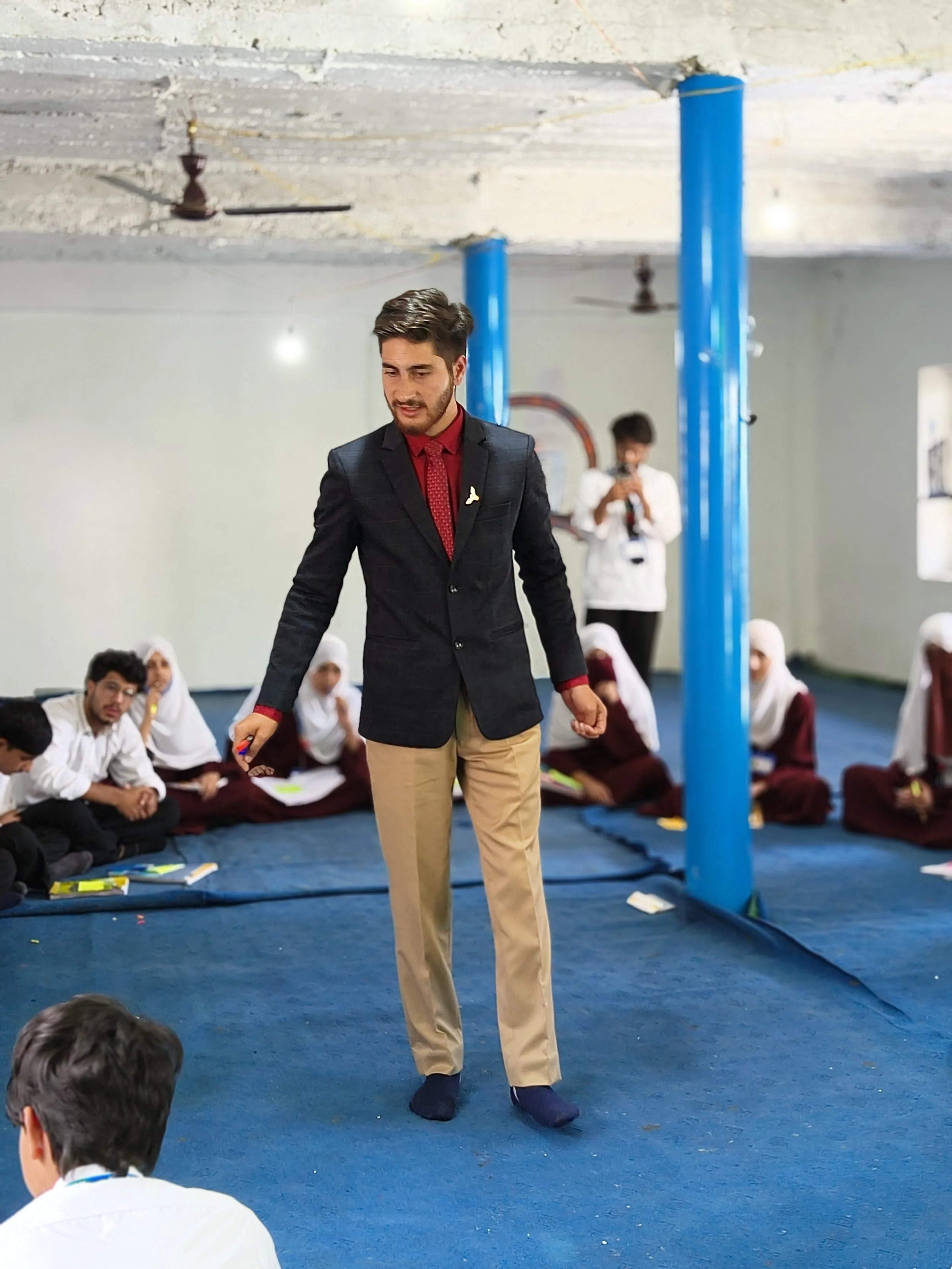
I consider myself a peacebuilder, not because of a formal title, but because peacebuilding has become a chosen way of living, grounded in action and the deliberate choice to empower others.
Growing up in Pulwama, one of the most conflict-affected parts of Kashmir, the word "peace" felt largely absent from everyday vocabulary. Yet the philosophy behind it was deeply woven into my upbringing. My parents always taught me to pause and question my assumptions before taking a step, lessons that allowed me to look beyond the surface of violent protests and recognise the deeper frustration, pain, and stories underneath.
This journey began with photography, using the lens not merely to document conflict, but to humanise it, to foster empathy, and to create spaces for genuine understanding. Today I think of peacebuilding as a spiderweb: not confined to one domain, but reaching simultaneously into creative, legal, and community spaces, becoming a focal point for exchanging ideas and building bridges that others can cross.
How did you find yourself involved in your current work / peacebuilding work?
My path was not planned. It was an organic response to the environment I grew up in and a growing desire to connect with a world beyond the conflict I had known since childhood.
A defining turning point came when I was selected for the Peace Practice Alliance cohort. That was my first formal long-term training in peacebuilding, and it showed me that what I had previously experienced as personal intuition was part of a much larger, global movement, one with methodology, community, and proven practice behind it. The PPA gave me language for what I had always been doing, and fuel to do more. That experience led directly to co-designing Peacevent with Irfan.
Who or what inspired you? Do you have an origin story or a moment when you saw your path in peace?
My inspiration came directly from growing up in Pulwama. There were months when school was barely accessible, when unrest was not something I read about but something I heard from my desk, right outside the window.
Sitting in those long uncertain days, a deep curiosity grew in me. I began to realise that the anger on the street was not coming from nowhere. It was coming from frustration, pain, and a feeling of being completely unheard. And I realised that my generation needed an anchor. If young people around me were only given reasons to feel angry, the cycle would keep repeating. We needed spaces to think clearly, talk honestly, and hold onto hope. That realisation, that someone needed to build those spaces, became the beginning of everything.
As you faced challenges, what helped you move forward in your path?
Working in Kashmir comes with very real challenges: local scepticism, political friction, and the weight of a word like "peace" that has been used and misused so often it has lost its power for many young people here.
During our early Peacevent workshops, many participants felt genuinely distant from the idea of peace. They arrived carrying exhaustion and frustration, which made complete sense. But through careful dialogue and the creation of genuine safe space, something shifted. A quiet belief began to take root. Watching someone move from deep scepticism to actively seeking ways to contribute to their community affirmed everything for me.
Two things keep me anchored: the global community of practitioners I found through the PPA, knowing I am not doing this alone, and a deep sense of local responsibility. Kashmir is my home and these are my people. Giving up is simply not an option.
────────────────────────────────────────
Part 2: Current Work
What brought the two of you together?
What brought us together was not just a shared cause but a shared standard of trust, and in Kashmir, trust is never a small thing.
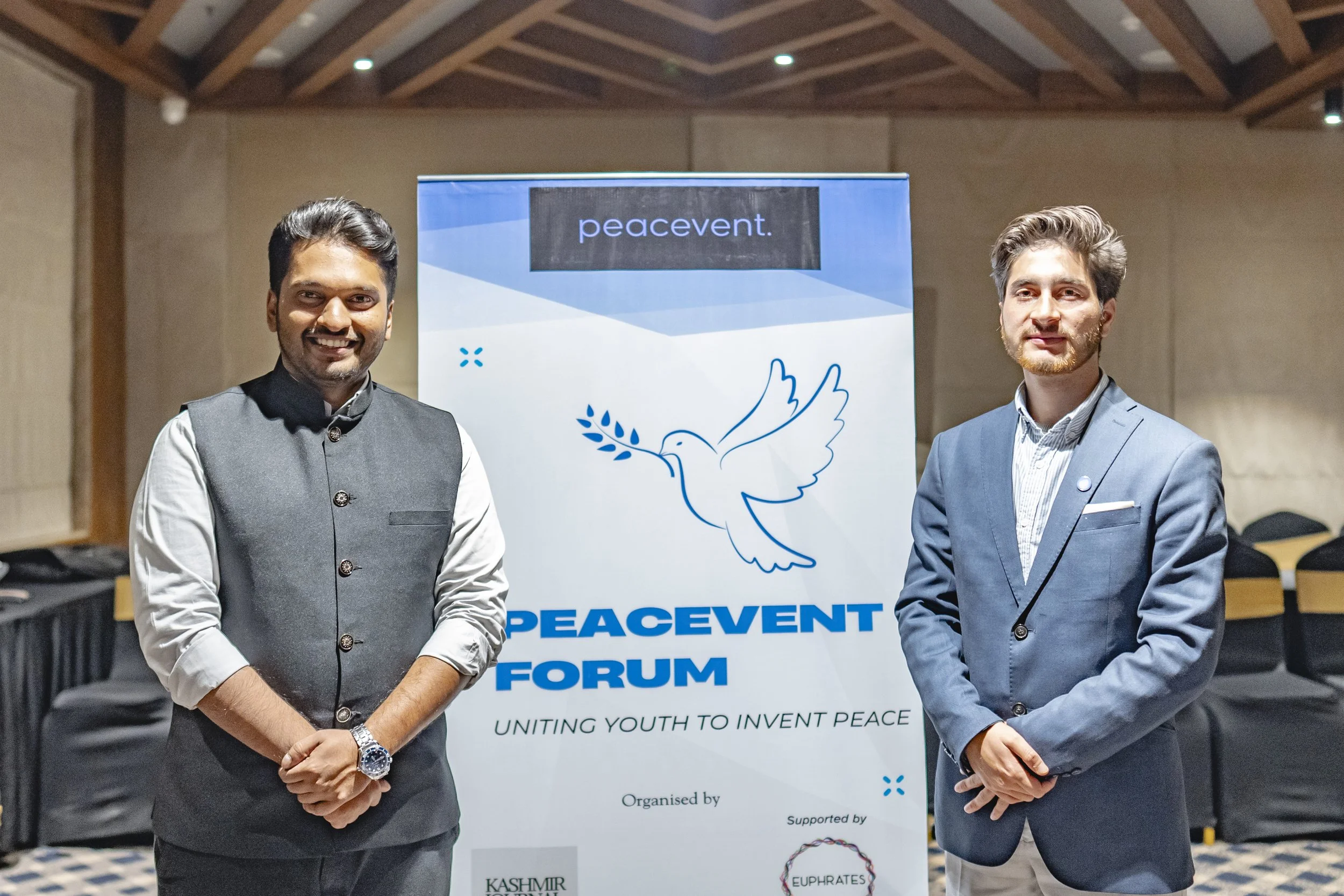
Irfan had worked in and on Kashmir for nearly six years before Peacevent took shape. In that time he had encountered many capable, committed young people. The question had never been capability. Kashmir is full of capable people. The question was deeper: whether there was someone with whom he could associate fully, without reservation, for something as close to his life's mission as this. Kashmir is an extraordinarily sensitive space. Working on it as an outsider carries real responsibility. It could not be built on hope alone. It had to be a doubtless decision from inside.
When Owais came through the Peace Practice Alliance, something was different. The PPA had shaped him in a space that was genuinely agenda-free, globally grounded, and built on honest practice, free of the political currents and inherited narratives that inevitably complicate the work of young Kashmiris navigating an extraordinarily complex environment. For Irfan, that was the signal he had been waiting for. For Owais, finding Irfan meant encountering someone whose years of outside research and international grounding complemented everything he brought from within.
Two perspectives, forged in the same training space from opposite ends of the same question, converging on one programme.
Do you have a specific area of focus in your work?
Youth leadership and rights-based development in Kashmir, grounded in the conviction that sustainable peace is not a programme you run but a condition you cultivate through dignified, participatory development that puts communities in charge of their own futures.
What does your work as a peace leader look like in your current context?
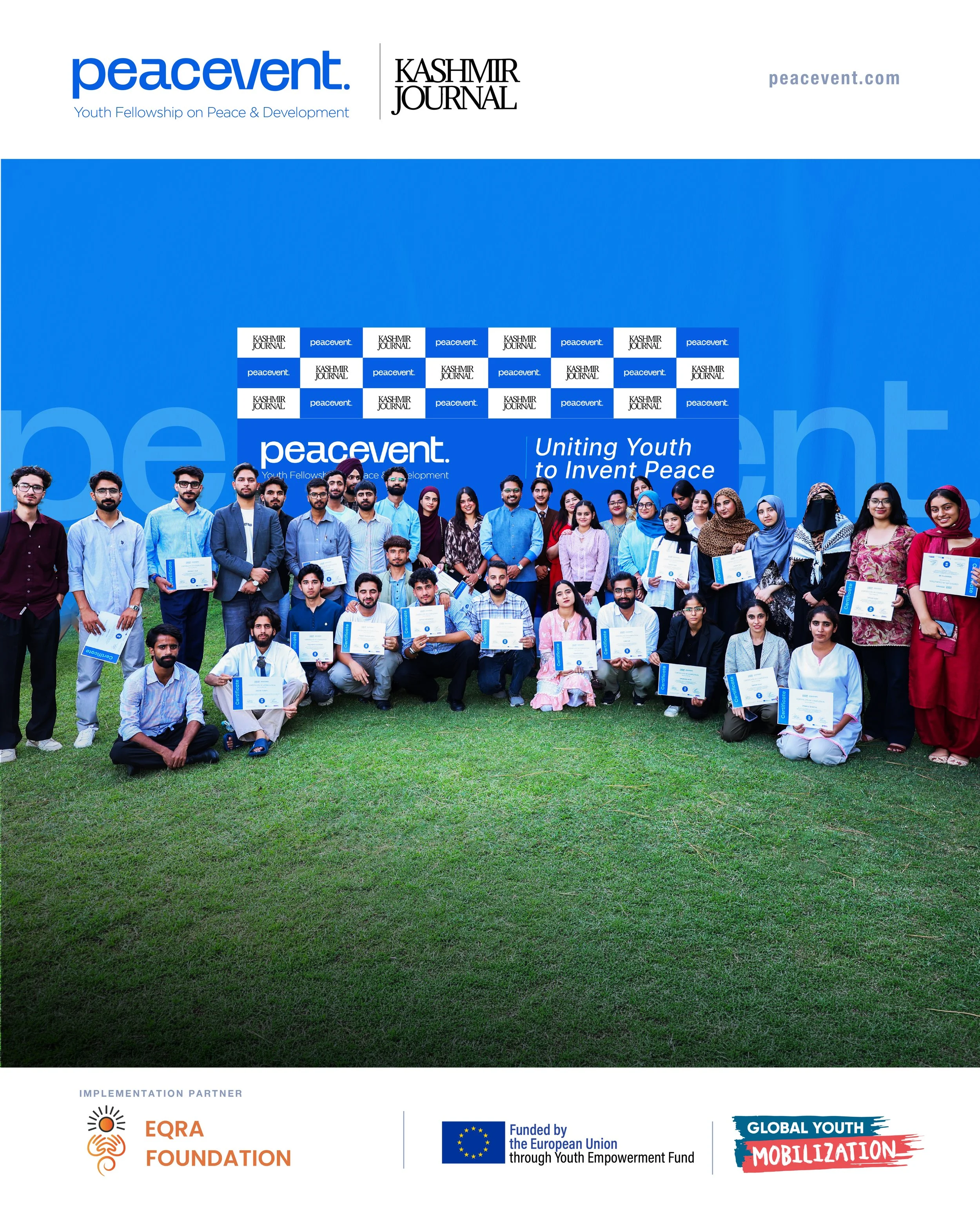
Kashmir Journal was the beginning. Started by Irfan in 2019, it grew from a field record of voices and stories into a sustained intellectual project, the seedbed from which Peacevent was born.
Peacevent, meaning quite literally to invent peace, was co-designed by Irfan and Owais as a post-PPA initiative, supported by a founding grant from the Euphrates Institute. The first edition brought together 50 fellows from across Kashmir for an in-person workshop facilitated by a UN Geneva-based practitioner. The outcomes were significant enough to attract European Union funding through the Global Youth Mobilization initiative for a second edition.
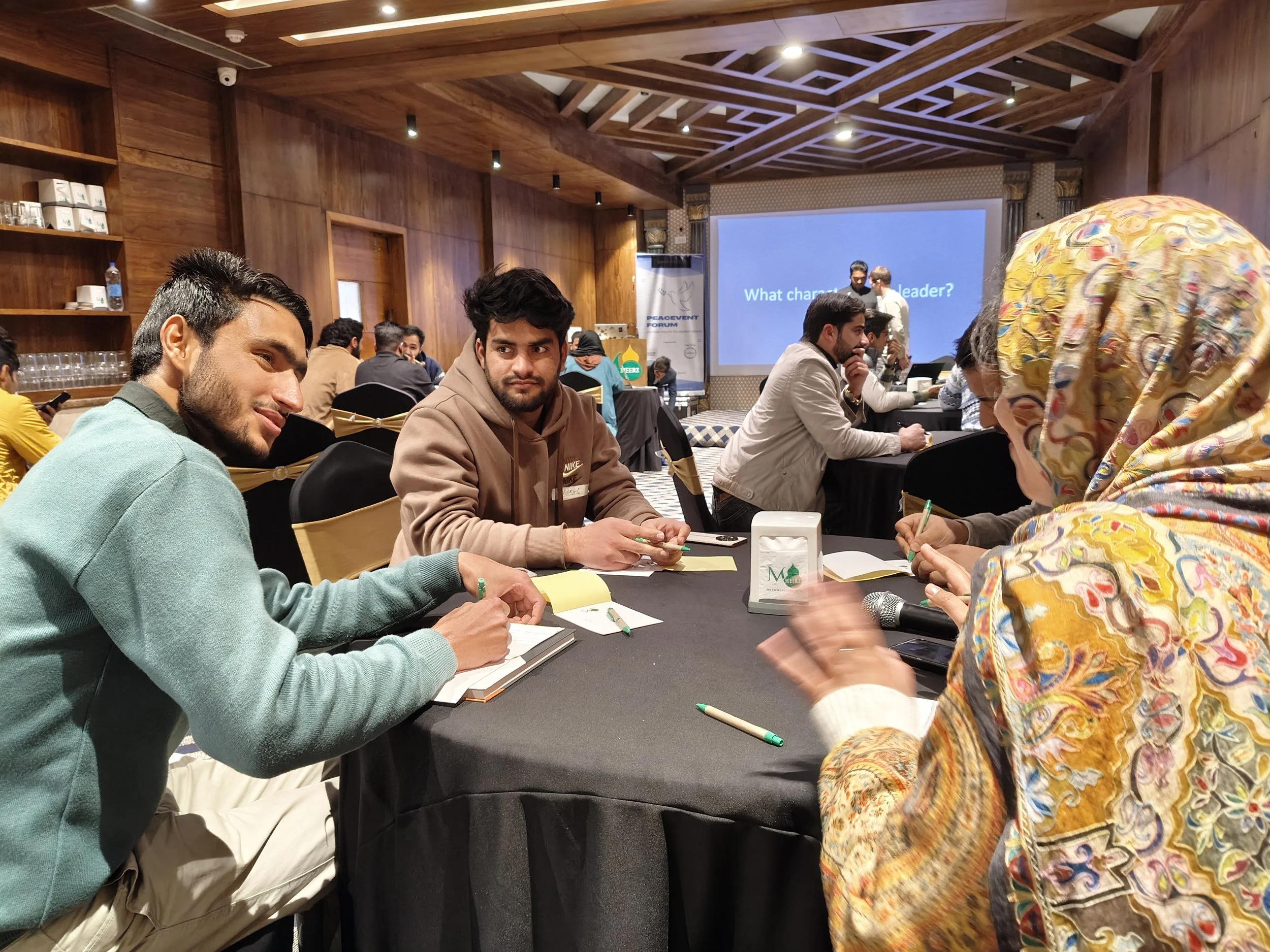
Peacevent II scaled the model: 100 fellows from across Kashmir and the wider region, brought together for a two-day residential leadership lab in Kashmir. The programme included exclusive masterclasses from high-level international practitioners, including a UN Special Rapporteur who addressed the fellows directly. A Vision Lab curated those learnings into fellows' own ideas, which the residential Leadership Lab then helped them turn into concrete community projects. The 100 fellows collectively authored a peace and development outcome document, a generation's articulation of their own vision for Kashmir in their own words, to be published in partnership with the EU Global Youth Mobilization initiative.
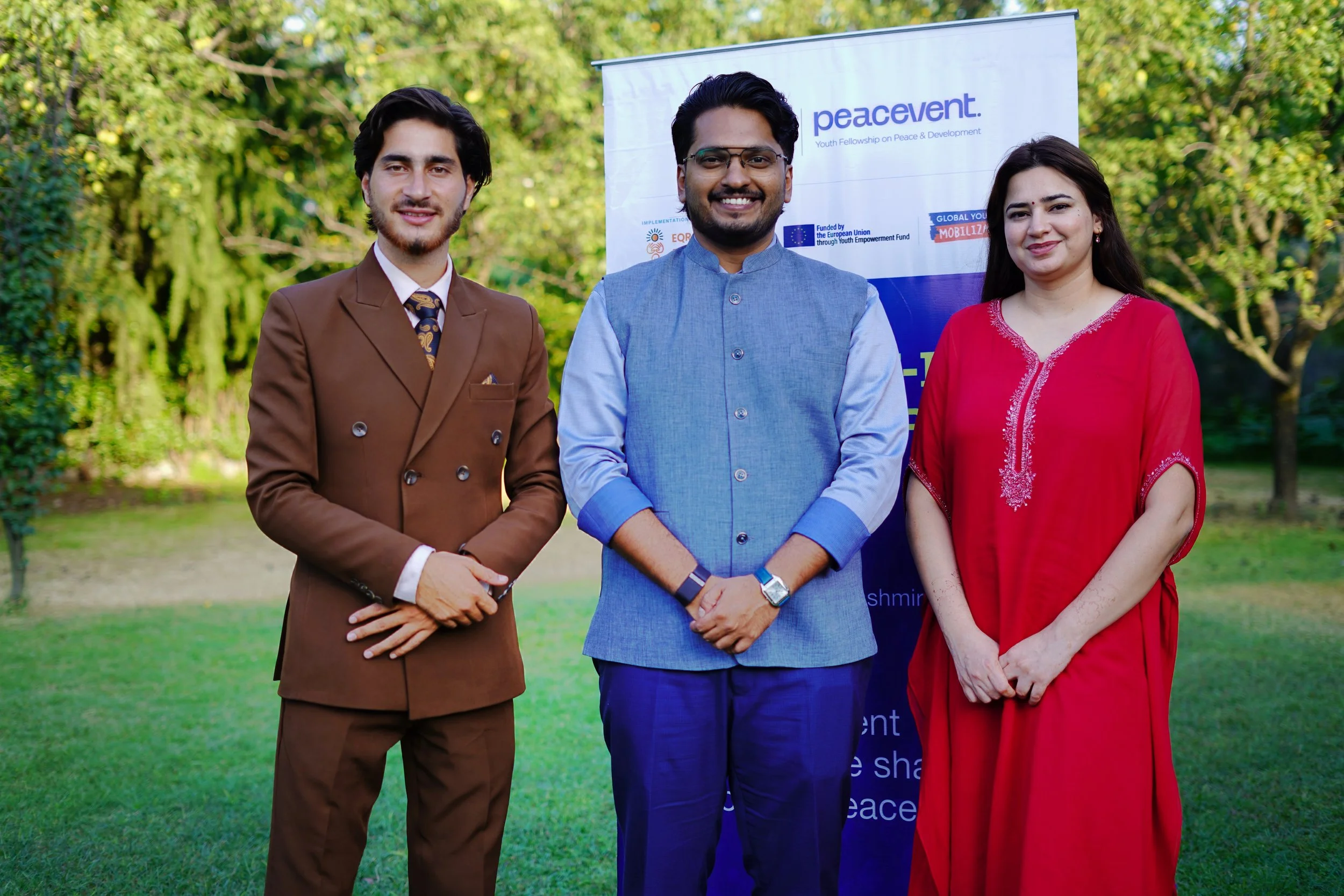
For the second edition, Peacevent partnered with Eqra Foundation, founded by fellow PPA alumna Simran, to intentionally bring in young people from Jammu alongside those from the Kashmir Valley.
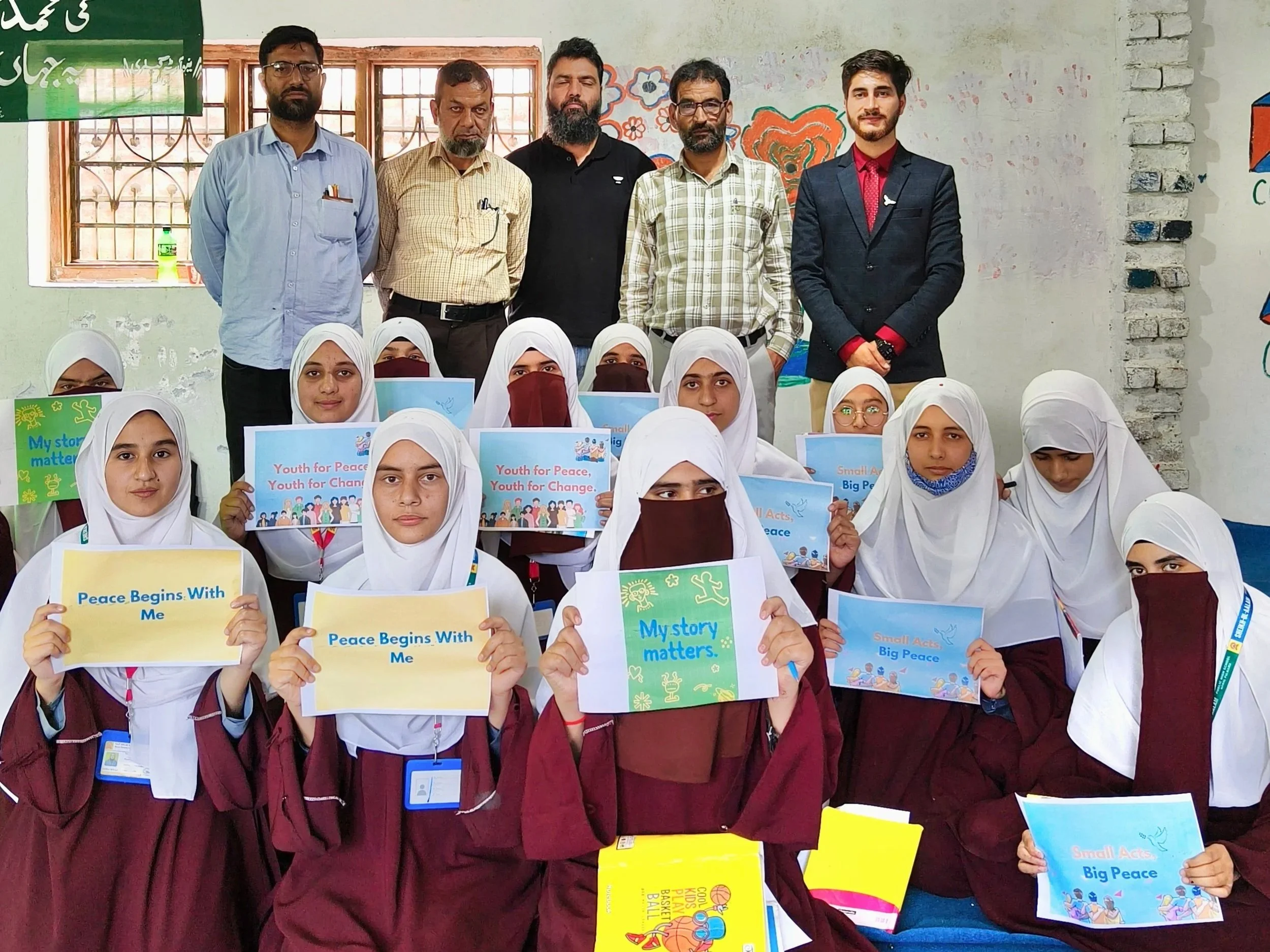
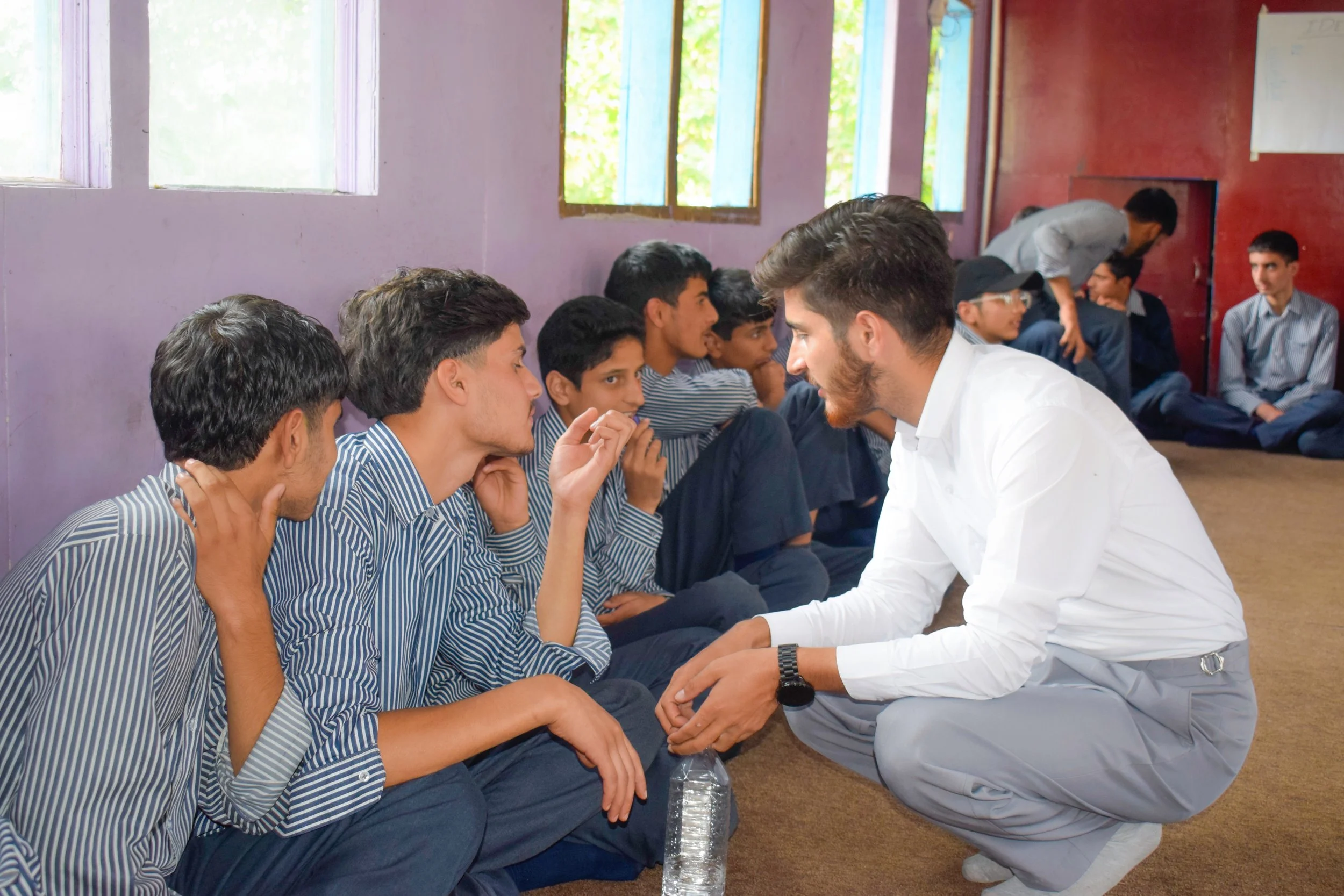
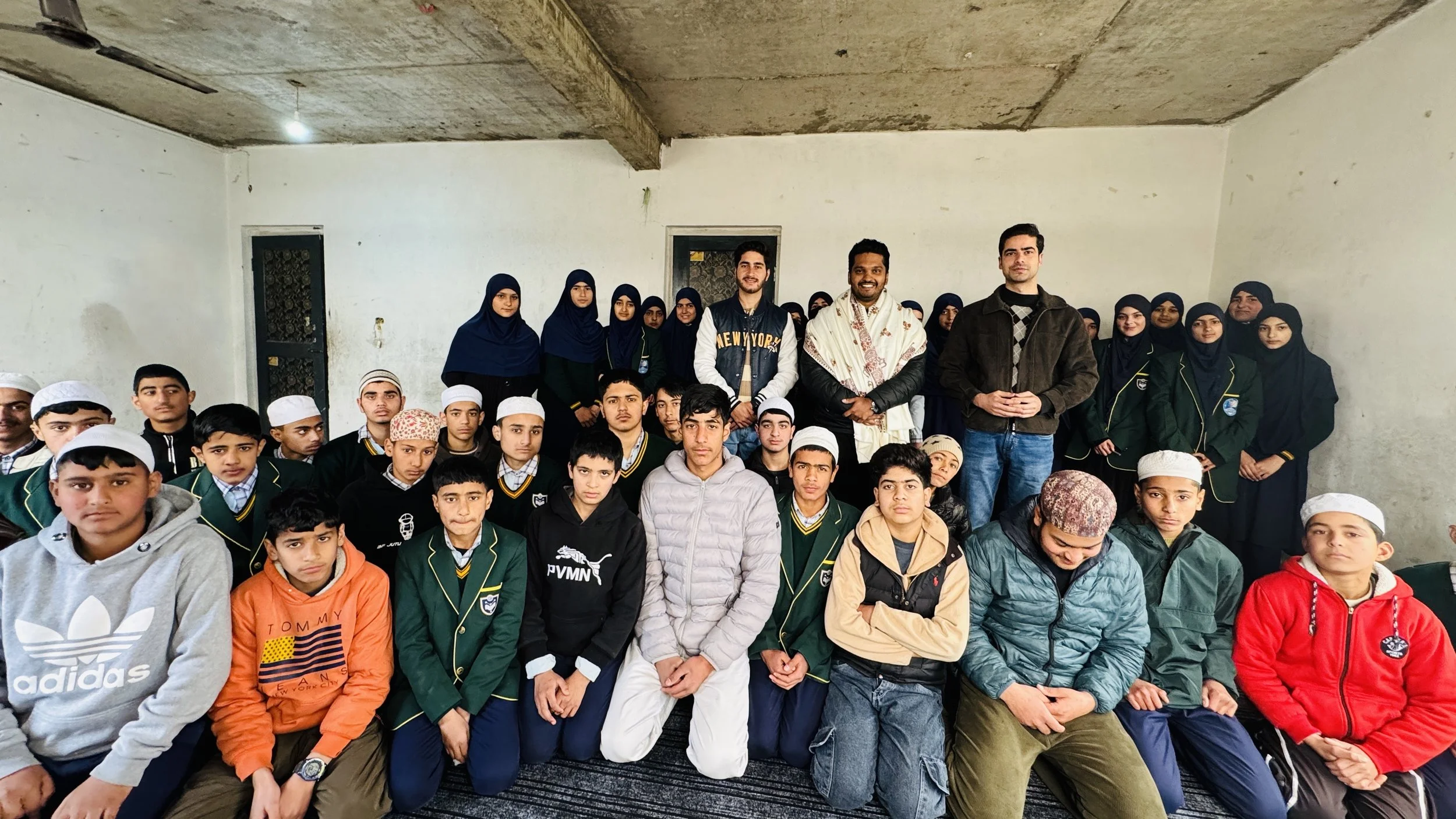
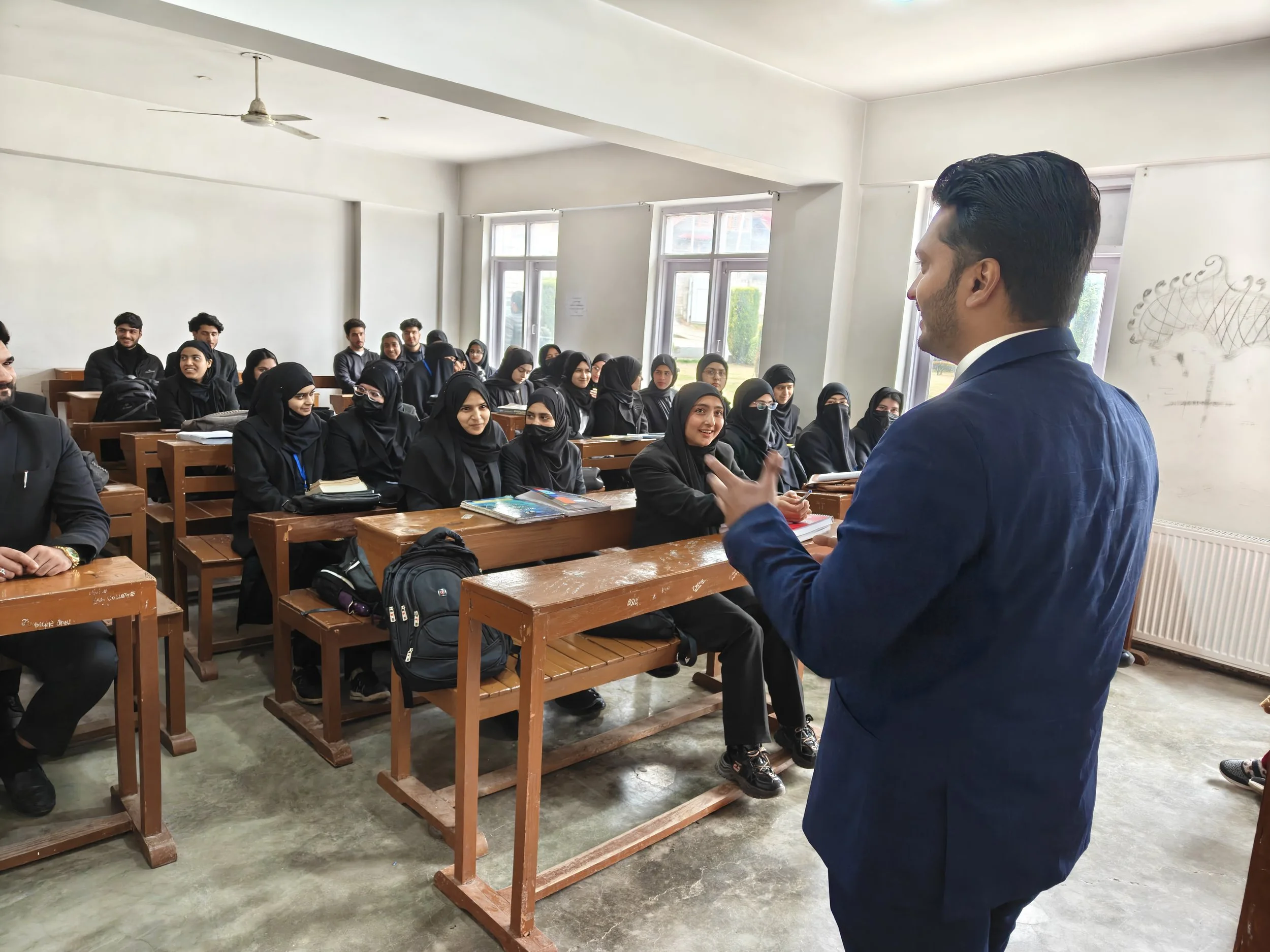
Beyond the fellowship programme, Peacevent has extended its reach through direct outreach into schools and colleges across the region, introducing students to the foundations of peace leadership and participatory development. It’s been one of the most grounding parts of the work, seeing young people engage with these questions often for the very first time.
The ripple was the point. The Euphrates Peace Practice Alliance trained Irfan and Owais. They trained their fellows. And those fellows went on to develop their own micro peace and development initiatives within their communities, carrying the practice far beyond what any programme alone could reach.
What are you most proud of in terms of your peacebuilding work so far?
The ripple.
When Janessa Wilder, founder of Euphrates Institute, addressed our Peacevent II fellows in an opening session, we invited them to reflect on one idea that stayed with them. Responses came in within days, honest, searching, and specific. One fellow wrote:
"The river. Honestly that stayed with me not as a metaphor, but as an actual argument. She wasn't saying peace is beautiful or desirable. She was saying it has a force that destruction cannot stop. The river kept flowing through Fallujah. Peace isn't the absence of conflict. It's something that moves through conflict and survives it."
That reflection told us that the programme was doing what we always hoped: not delivering peace as a concept, but creating conditions for young people to discover their own relationship to it. And in the months that followed, those same fellows began building small initiatives, community dialogues, and micro projects, each a seed planted in Peacevent, now growing on its own.
“The river. Honestly that stayed with me not as a metaphor, but as an actual argument. She wasn’t saying peace is beautiful or desirable. She was saying it has a force that destruction cannot stop. The river kept flowing through Fallujah. Peace isn’t the absence of conflict. It’s something that moves through conflict and survives it.”
────────────────────────────────────────
Part 3
Peace Practice: Irfan
How would you define peace?
Peace is the most fundamental privilege a human being can have, and like all privileges, it is unevenly distributed, actively maintained, and easily lost.
I have spent years working at the intersection of academic peacebuilding and practical experiential work, between the theoretical frameworks of international law and human rights on one side, and the lived realities of communities in conflict on the other. In that space I have come to a conviction I cannot shake: peace is not the absence of conflict. It is the presence of conditions: dignity, agency, rights, belonging, conditions that make conflict less necessary and less likely. When people have genuine agency over their own futures, they tend to protect them. That is the simplest version of everything I believe.
What, if any, regular practices do you have to foster peace in yourself?
I read across traditions. I am an omnist by conviction. I find wisdom in Islamic spirituality, in Hindu philosophy, in Buddhist practice, in the mystical traditions that have always coexisted in Kashmir itself. That reading is not academic. It is how I stay connected to the deeper reasons for this work when the institutional and political realities feel heavy.
I also write. Kashmir Journal began as a personal record of Kashmir, an attempt to understand what this place meant to me and what I believed about its future. Over the years it has grown into something larger: an autobiographical work covering my first three decades of life through the lens of Kashmir, embedding a developing conviction about peace and development, and reaching toward a broader vision for South Asia. Writing toward that book remains one of the most sustaining practices I have.
What keeps you in this work and motivates you to continue?
The ripple.
In the months after Peacevent II concluded, fellows began building their own things, small peace and development initiatives in their own communities, projects they had conceived themselves. Nobody had assigned it. It emerged from them, organically, as a consequence of having been given a genuine space to think and act.
That is what keeps me in this work. Not the programmes themselves, but what happens after them. The understanding that the goal was never to create a dependency on Peacevent, but to create the conditions for young people to become their own peacebuilders, carrying the practice into spaces we will never reach, sustaining it long after any programme ends.
Part 3
Peace Practice: Owais
How would you define peace?
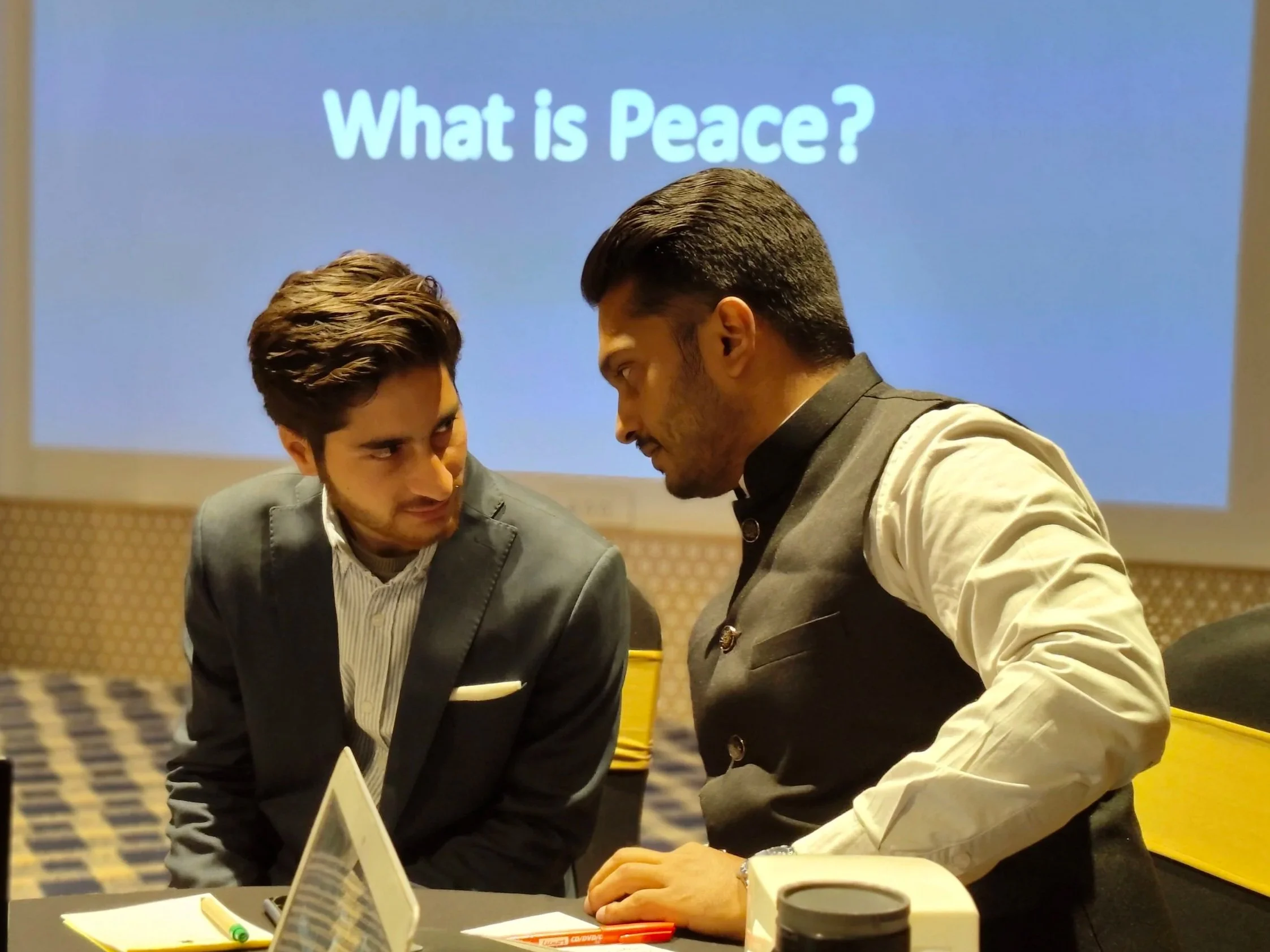
Whenever we begin a peacebuilding workshop in Kashmir, this is one of the first questions we ask. And every time, the answers are about basic survival: no violence, no discrimination, no curfews, no conflict. Hearing those responses is a sobering reminder of our reality. For many young people growing up here, violence and division have been normalised for so long that peace no longer feels like a fundamental right. It feels like a privilege.
That is why, for me, peace has to start from within, a quiet personal decision to unlearn that normalisation, to heal, reflect, and choose empathy over bitterness. On the ground, peace is the active, everyday work of breaking down cycles of hostility in the small, courageous moments: when young people begin to question the biases handed down to them and choose to see their neighbour differently. Peace is reclaiming the belief that safety, dignity, and understanding are rights, not privileges.
What, if any, regular practices do you have to foster peace in yourself?
Inner peace, for me, is a daily practice of stepping back and reflecting. I regularly use meditation exercises I learned during the PPA, which gives me space to process heavy emotions and reset before I carry anything into my interactions with others.
What sustains my spirit is gratitude and the ripple. Looking back at this journey and recognising the spaces and relationships it has given me takes away the weight of isolation. And seeing a fellow from our programme go on to start his own initiative in his local community. When the work takes on a life of its own through others, that is the deepest form of calm I know.
What keeps you in this work and motivates you to continue?
What sustains me are the small, undeniable human transformations that happen right in front of us.
It is belonging and responsibility. Kashmir is my home and these are my people. Having grown up surrounded by instability, I know what it takes away from a young person's growth. Supporting my own community is not a choice. It is a commitment.
It is watching people reclaim their agency. The moment in a workshop when someone who arrived feeling exhausted and distant from hope realises they still have power over how they respond to their environment. That gives me everything I need. When I see young people choose empathy and hold onto their shared humanity, I am reminded of what is possible and why none of this can stop.
────────────────────────────────────────
Part 4: Call to Action
What vision do you hold for yourself, your community, your organization, and beyond?
For Kashmir, we hold a vision of a generation of young leaders who understand peace not as the absence of conflict but as the active, ongoing work of building dignified, rights-respecting communities. We want Peacevent to become the institutional home for that generation, a place where the most committed young minds from across the region come to learn, connect, and act together.
Beyond Kashmir, we are working toward a replicable model of development-centred peacebuilding that can be evaluated rigorously, adopted by institutions, and funded on its own merits, not as charity, but as the most cost-effective investment in long-term stability any society can make. This work increasingly touches spaces beyond traditional peacebuilding, including the growing conversation about how businesses operating in conflict-affected regions understand their own stake in peace, because lasting stability is never confined to a single sector.
How can we best support your work? Are there any resources or organizations that you support or have been supported by that you'd like to share with our community?
Three things would matter most right now.
First, visibility. Connecting our fellows to the broader Euphrates global network, particularly peacebuilders working in other conflict-affected contexts, which would deepen the learning on both sides and give our fellows a sense of belonging to something larger than one programme in one region.
Second, partnership. We would love to explore what a more formal and sustained collaboration between Euphrates and Peacevent could look like for future editions, in curriculum design, co-facilitation, or shared funding structures.
“Peace leadership is not a destination you travel to. It is a practice you begin today, with what you have.”
Third, amplification. The stories emerging from Peacevent, the reflections, community projects, and quiet personal transformations, deserve a wider audience. The Euphrates storytelling platform and global reach would help us tell those stories in a way that honours them.
What advice would you give to someone who is interested in becoming a peace leader?
Start where you are. Not where you think the conflict is, not where the funding is, not where the attention is. Start in your own community, your own institution, your own street. Peace leadership is not a destination you travel to. It is a practice you begin today, with what you have.
Know whether you are speaking for or building platforms for. That distinction matters more than almost anything else. The communities you work with are not waiting for your voice. They are waiting for the platforms, resources, and institutional backing that let their own voices be heard.
And find your community. The most sustaining thing we have discovered in this work is not a methodology or a framework. It is the people doing the same thing in different corners of the world. The Euphrates Peace Practice Alliance connected us across thousands of miles, gave us a common language and a shared practice, and made this work possible. It remains the most generous gift this journey has offered.