
Cultivating a youth movement for peace in Cameroon: The intersection of peace and economic development
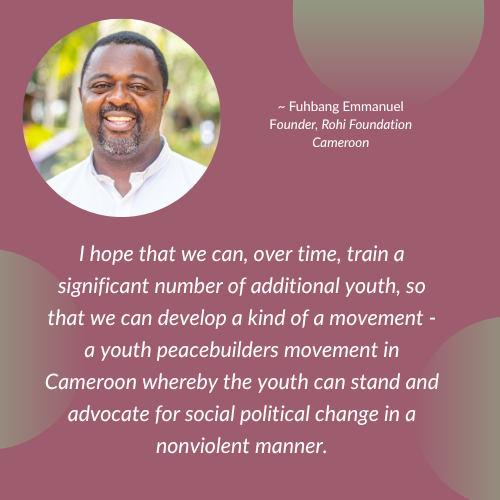
Rev. Dr. Fuhbang Emmanuel Tanifum stands as a beacon of hope and inspiration in the midst of turmoil, serving as an interfaith and peace leader in the English section of Cameroon where conflict has persisted for over nine years. He is a long-time member of the Euphrates community and the founder of Martin Luther King University Institute (MALUKU), an Institute that equips young Cameroonians with entrepreneurial, vocational, and peacebuilding skills, and Rohi Foundation Cameroon, an organization dedicated to promoting peace, human rights, education, and humanitarian action in Cameroonian society.
We last interviewed Emmanuel in 2021, shortly after he completed Euphrates’ Peace Practice Alliance program. Since that time, his vision has blossomed. What began as a modest initiative to train young people in peace practices has evolved into a government-accredited vocational institute that equips vulnerable youth not only with the skills to resist violence, but also the means to build a livelihood and cultivate a sustainable future.
In this conversation, Emmanuel reflects on the transformative journey of his program and how it has evolved in the last five years; what he has learned about youth, trauma, and the vital link between economic stability and lasting peace; and the quiet, unshakeable faith that continues to anchor him. His inspiring story embodies dedication, resilience, hope for the future, and deep love for his community and the world.
[The full interview has been edited for length and readability.]
It has been nearly 5 years since we first posted a story about your work. I’m curious to hear about the current situation in Cameroon and what it is like to be a peace leader there right now.
Yes, indeed it's been a long time and there's a lot that has happened over the years. The volatile nature of the context in which I'm doing my peace work has remained the same, and it is even getting more precarious. It has been over nine years that the violence has gone unabated and it is expanding to other parts of Cameroon. The challenges are becoming more and more enormous. I'm really hoping that I'll be able to continue to scale up what I've been doing so that we should be able to make some impact with time.
How has your peacebuilding work evolved since 2021?
My work focuses on youth peace building. Over the years, I've organized several cohorts of training with youth - we have trained over 1,300 youth already and we are currently starting another cohort. We started just by training them on peace practices.
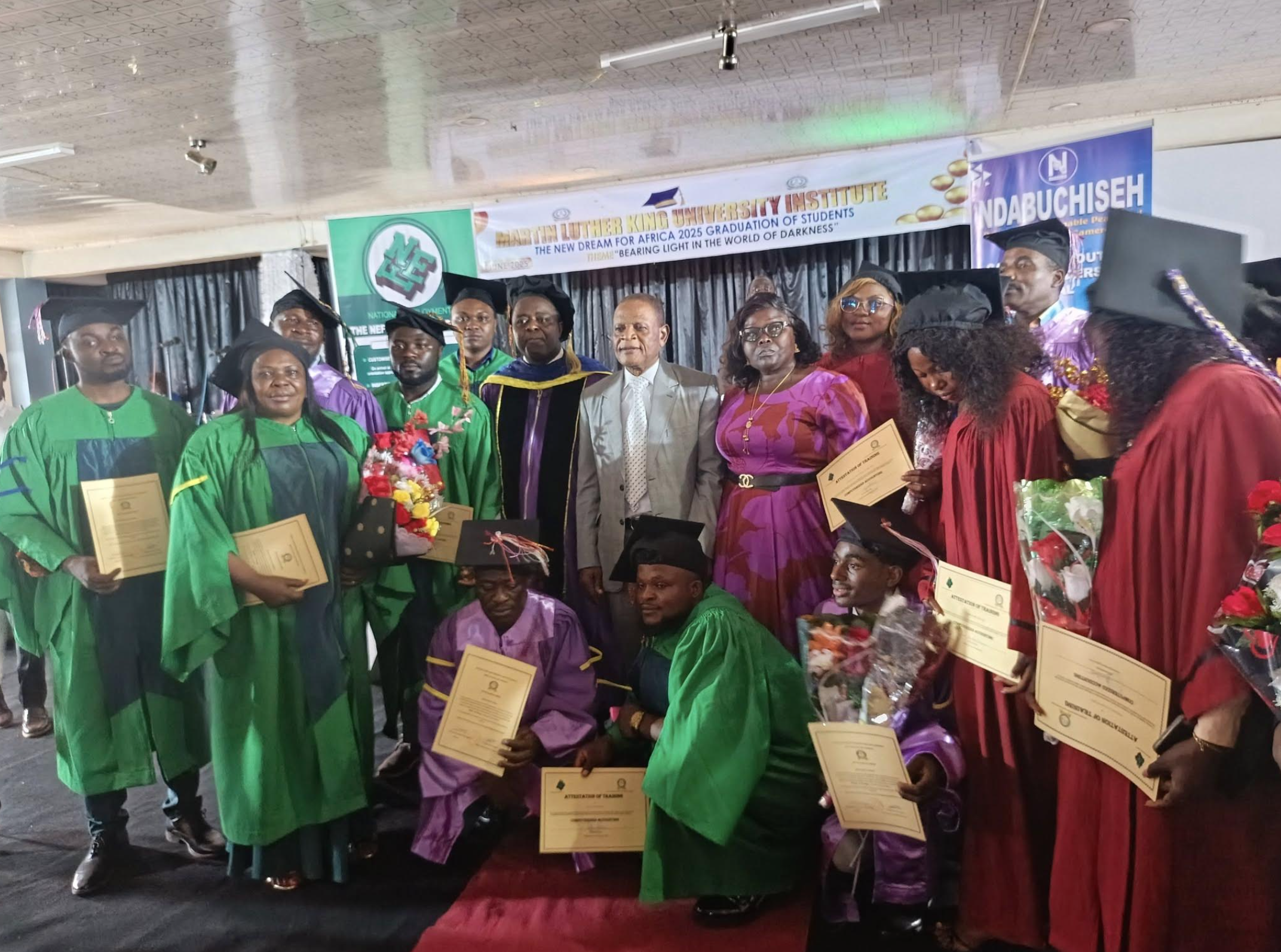
Most recent graduating class.
Over time, as we evaluated the program, we saw the weaknesses of this model in our context, whereby the youths were becoming vulnerable to violence - not just because they lacked peace practices skills, but also because they saw violence as a means of livelihood. As a result, we decided to incorporate training on self-employment skills into the peace practices training, so that at the end of the training, the youth will be able to gain employment and be able to sustain themselves and not easily give in to the seductions of the warlords or the warmongers. That model has really been working very effectively.
In addition, we have worked very hard to establish a structure which is recognized by the government. One of the challenges we were having was that the youth were doubting the credibility of the training. In 2023, we succeeded in getting our training center accredited by the government as a vocational training institute. Now youth find it very comfortable to come and train in our institute because they know that at the end of the day, the certificates that will be given to them will be credible and recognized in the entire country and even beyond.
For the past two cohorts, we have also begun to provide a 9-month residential program, which is proving to be really effective. This program targets those youth that are already highly susceptible to violence, so that we have enough time to be able to deradicalize them and to reduce their vulnerability. For those that are not so highly susceptible to violence, they are part of the non-residential program. For both groups, we integrate the element of youth peacebuilding into the vocational curriculum, so they leave with vocational training and peacebuilding skills.
What sort of training and certification do participants receive through the Institute?
When the youth come to our center, we begin with a psychosocial analysis to be able to determine their psychosocial needs and to identify the right mentors who can help them. After that, we begin immediately with peace practices training and also counseling. After a few months, we also introduce them to vocational skills, including self-employment skills. We always hold discussions with the youth to be able to understand the skills that they would like to be trained in.
For the past two years, we have settled on four main vocational skills we offer training for: organic farming, renewable energy technology, community nursing, and forestry technicians. By the time they leave our center, we make sure they have gained the necessary skills and a good business plan, as well as peace practice skills at the personal, interpersonal, and community level, so that when they go back into their communities they should be able to establish themselves in an activity that generates income and when doing that activity, engage their peers in peace practices as well.
When you reflect on your work, what are you most proud of?
There's quite a lot of things that I'm really proud of. We have always had enormous interest from youth who want to go through our training. The good thing about it all is that those that come - either in the non-residential or the residential program - we see a remarkable transformation happen in their lives. Many come with a lot of trauma, low self-esteem, a lot of fears, a lack of purpose. But when they are leaving our training, these youths are always purpose-driven.
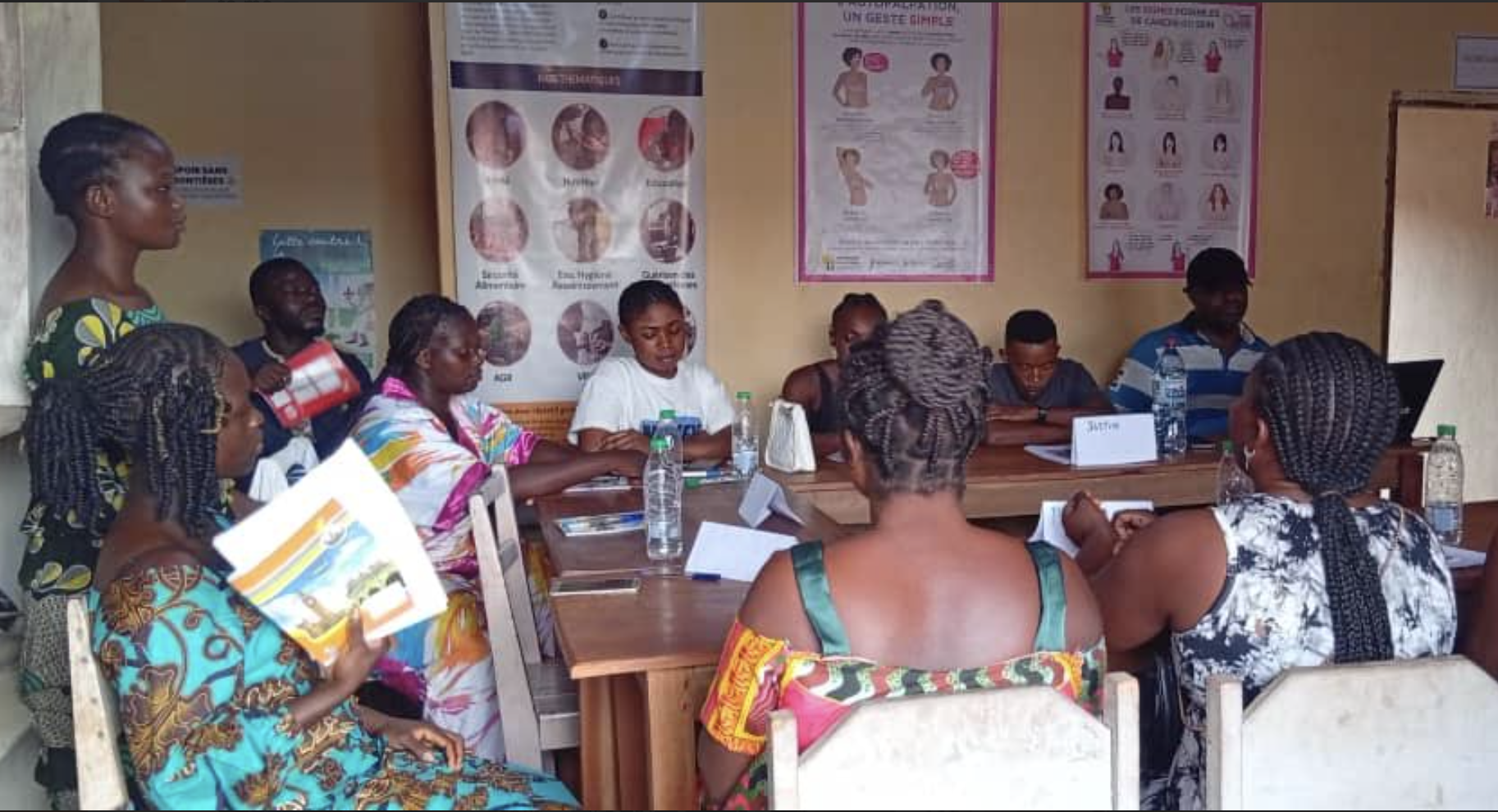
Before the integration of the economic aspect, what really was very striking to us was that we were training youth, yet there were some that went back after our training and were still entangled in violence. But with the integration of this economic component, almost 80% of those that we have trained through this model are really purpose-driven. They stand against violence, and they are becoming veritable agents of sustainable peace and development in Cameroon. That is a very huge success, because when these people are self-reliant, they don't give in to those societal ills, like violence, crimes, and the rest.
That's wonderful. So you're not seeing those people falling back into violence?
That's right. That is a very striking thing that is happening with our participants.
I think our greatest issue now is to be able to continue to scale up what we are doing so that we are able to meet the need and, in time, to have the impact we are hoping for. Unfortunately, our capacity at this moment cannot enable us to scale up and take in a great number of youth. The highest number of youth we can accept in a cycle is between 15 to 25 people. We need more support, more sponsors that can sponsor youth to participate in the program. With the youth that we do take every cohort though, we are seeing success.
We continue to work very hard to see if we can, every year, increase the number of those that we are training. We are already in a very volatile and also a vulnerable situation. Most of these youth have dropped out of school, and the economy of the area they are living in is already completely devastated by the armed conflict. So we need a lot of support to be able to sponsor these youth. We really hope that we'll be able to get there, to be able to train as many as possible in the next few years to come.
What stands out to you when you think of what you've learned from this work or perhaps advice you would give to others who are facing similar challenges?
Yes, the lessons are really many. In fact, one of the things is that over the years, I've really come to understand youth psychology so well. I've come to understand that the youth age is a very delicate age in the human cycle, and it's the time whereby a lot of physical and psychological changes happen. And young people ask a lot of questions. They are eager to discover the world in which they are living. And in fact, they need a lot of guidance, a lot of mentoring, and without it, many of them - always out of inexperience - get into some of the extremism. I came to understand that the work that I'm doing is very critical. It's very urgent. And it's work that is needed for youth everywhere, not only in a conflict-stricken environment like ours.
I have come to understand that peacebuilding is really fundamental in having a sustainable peace in the society. And peacebuilding is not only necessary during times of violence, it is needed before. I really regret and wish that if we had started this work before the advent of this violence in Cameroon, perhaps this violence wouldn't have ever occurred. It is also needed during and even after violence as well. There is still a high need for it here. We've had so many challenges.
It’s not all negative though. Some of those challenges have served to embolden us, to strengthen our faith, to even prove the work that we are doing. And over time, we have grown from the challenges that we have been facing.
What I have also learned is that neutrality is key - it is a very key factor when you are working in such a dangerous context and also trying to be autonomous in the way you do your work. It’s a very dangerous situation here. One of the dilemmas we've been facing is that we are always seen as people to be suspicious of because the factions feel suspicious of us for working with the government and the government also will be thinking that we are working with the rebels. That kind of accusation and counter accusation is always there. And sometimes we struggle to maintain our neutrality, struggle also to be independent in our way of doing things in our resources. That challenge of always being accused from both sides, always receiving threats from both sides is always there. I cannot count how many times I've been either invited by the government for questioning or arrested by rebels for questioning.
Among the youth and the communities at large, we are really celebrated. They see us as a beacon of hope, as a beacon of hope. And in fact, we are encouraged by the community to continue to do what we are doing. And the youth, they keep coming in their numbers on a daily basis, expressing their interest in our activities. And that is really what has encouraged me. I've had opportunities to travel out of this situation, but when I look at the cries of the people, especially the youth, and see the hope in which our work is bringing to them, I always feel resilient. I always get the fortitude to be able to continue to push on with it.
Is there anything else that helps you to keep going in these difficult times?
Well, I cannot rule out the element of faith in it. I really feel this - a divine kind of intervention, because it's really challenging and there are times in which sometimes you feel so, so, so, so, so exhausted. But I'm a faith practitioner - I always go back to the holy scriptures to be able to gain inspiration, to be able to gain encouragement, to keep doing what I'm doing. I see it as a special grace of God, a divine mandate, my own divine purpose in life. I strongly believe that I was placed in this part of the world to be able to fulfill this assignment. And I just hope and pray and work very hard to be able to accomplish that task, so that one day I could say it is well done, it is finished.
That's beautiful. I'm curious - on a personal level, how have you evolved as a peace leader in doing this work over the years. Do you notice any differences in yourself?
I think there are three arms of growth that I've experienced. The first is spiritual. I've really felt that my faith has overcome serious obstacles, trials, challenges, and those things that at first could work me up, stress my emotions - those things, they are less of a burden and have little impact on me emotionally. Second, in terms of knowledge. Thank God that at the early stage, when I started this work, I had an encounter with Euphrates and they've been able to grant to me knowledge and skills. Over time, with constant practice - practicing peacebuilding skills on a daily basis - I've been able to grow in terms of knowledge and skills. Third, I have also been able to grow in terms of, let me put it this way, in terms of virtues. Over the years, from all the challenges - the ups and downs, the failures - I've been able to develop more tolerance, more patience, more empathy, and a lot of internal qualities as a result of what I've been able to do over time.
Are there certain things you think have helped you to grow in those ways?
Yes, definitely. There are quite a lot. I don’t hesitate in acknowledging the invincible hand of God in all of this, because when I look back at my trajectory in peace building work, it's like Providence has always happened to me. When this crisis [in Cameroon] started, at that early stage - by 2017 - I was connected to Euphrates. The core model that I'm using in my work – bringing together personal, interpersonal, community, and global peace practice- is grounded in the training I received from Euphrates. So everything revolves around this model, that is what is fundamental. And I really think the encouragement that I have gained, the continuous support from Euphrates, and even the connections that Euphrates has provided has really helped me. God has, through Euphrates, helped me connect to other communities and organizations, on a global scale, which is really something that has helped me.
Are there any final thoughts you’d like to share with readers about your work and what you're doing there in Cameroon?
There's a lot that is going on with us here. What is standing out is this structure that we have put in place to be able to transform vulnerable youth to veritable agents of peace and development. The structure is there and it is working very well. That said, we continue to see how we can keep improving to be more effective over time. That is what is really preoccupying me all this time.
I hope that we can, over time, train a significant number of additional youth, so that we can develop a kind of a movement - a youth peacebuilders movement in Cameroon – whereby the youth can stand and advocate for social political change in a nonviolent manner. I hope that if we persist in what we are doing, with time, we'll be able to have a new generation, a new age whereby political conflicts in Cameroon will be handled differently.
I just continue to pray that we'll continue to create impact worldwide, and we’ll have the opportunity – with the necessary resources and support – to scale up our work to meet the need and so that the necessary impact that we are hoping for will be felt in due time.