
2025 Peace Practice Initiatives
This year’s 2025 Peace Practice Alliance initiatives were carried out in schools, refugee settlements, faith communities, Indigenous communities, youth networks, and local gathering spaces around the world. Each project looked different and shared a common purpose: helping people practice peace in real and everyday ways.
Some projects focused on communication and dialogue, helping participants listen more deeply, speak with care, and work through conflict with greater understanding. Others created spaces for healing, reflection, and mental wellbeing, recognizing that peace also begins within the body, heart, and mind. Several projects supported women, girls, children, and youth by building confidence, safety, leadership, and a stronger sense of belonging. Others connected peace with practical needs such as education, livelihood skills, legal awareness, and community support.
Together, these initiatives show that peace is trust, dignity, opportunity, safety, connection, and shared responsibility. Across the projects, participants practiced tools they could use in their homes, schools, relationships, and communities. They shared increased confidence, stronger communication, deeper awareness, and renewed hope for what becomes possible when local leaders create spaces for people to learn and grow together.
The following summaries highlight what each initiative did, who it reached, what changed, and how the work may continue. Some details have been limited or adapted for safety, privacy, or safeguarding reasons.
We invite you to learn more and join us in supporting these efforts.
Seeds of Harmony Mobile Peace Lab
Ecuador | Andrea
-
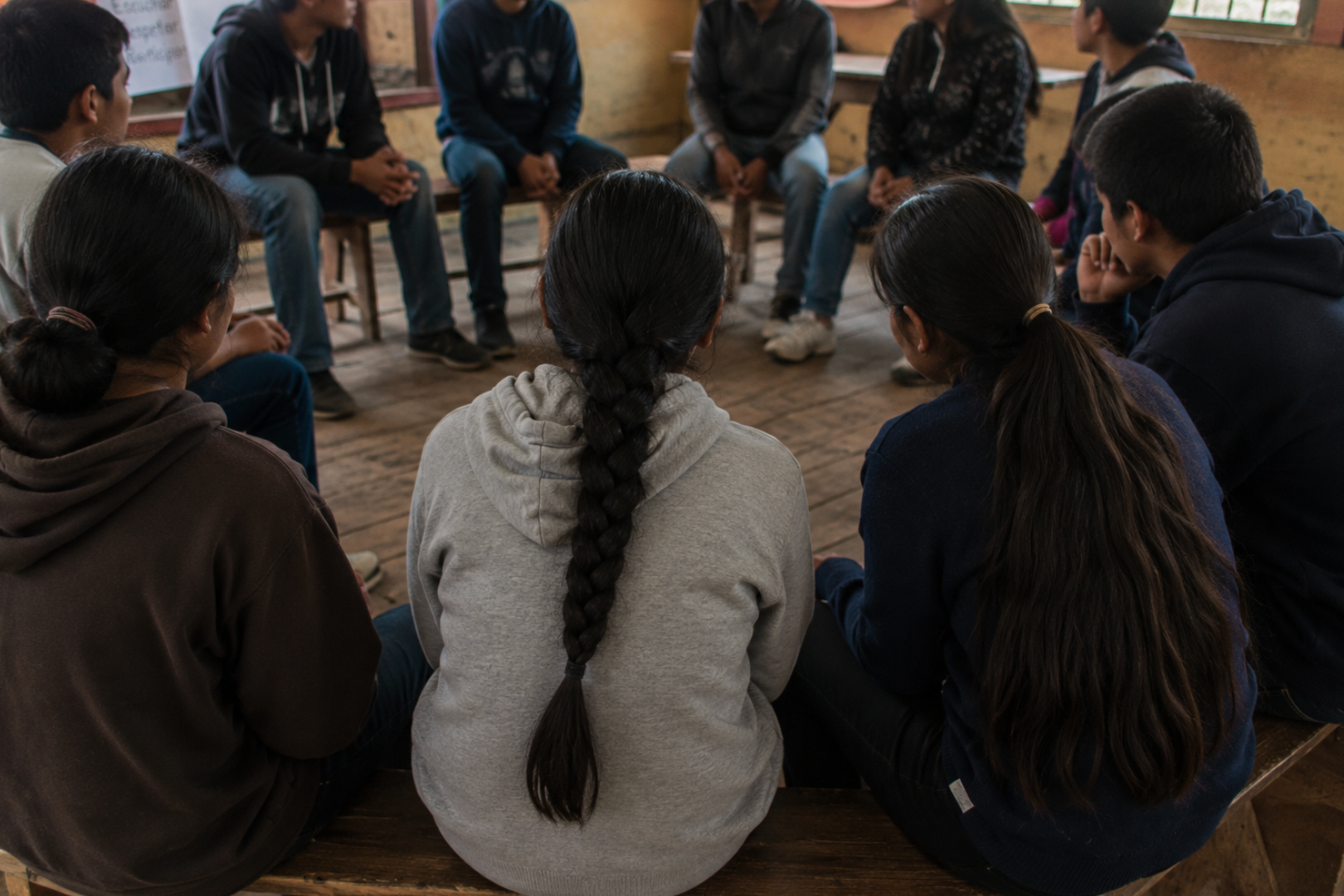
Andrea led Seeds of Harmony Mobile Peace Lab in Ecuador, adapting an initial school-based peace education idea into a youth leadership initiative in partnership with a local youth organization. This shift allowed the project to reach a wider network of young people and youth leaders across the province, where insecurity has made peace education feel especially relevant and urgent. The initiative began with a pilot workshop on nonviolent communication for 79 young people, followed by three virtual trainings on Integral Leadership for Peace for youth coordinators and advisors. The project culminated in an in-person provincial gathering with 92 youth leaders. Altogether, Seeds of Harmony directly engaged 171 young people and youth leaders, 112 of whom were women and girls. Participants responded strongly to the community peace practice content and shared that these tools felt practical for their own lives and leadership. One of the clearest signs of success came when young leaders requested that personal, interpersonal, and community peace practices be included in their official training materials for the year. Andrea plans to continue by strengthening local training materials and deepening partnerships with civil society organizations and youth networks.
Sowing Sustainable Peace through Youth Engagement and Community Action
Haiti | Madochée
-
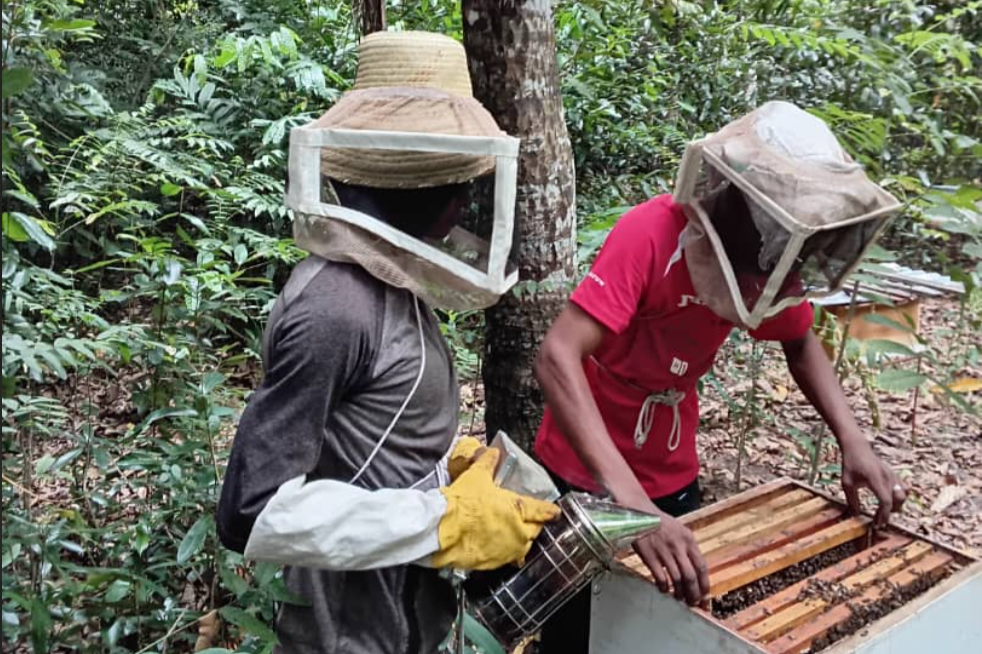
Madochée led Sowing Sustainable Peace through Youth Engagement and Community Action in Baradères, Haiti, creating a youth-centered initiative that brought together peace education and practical livelihood training. The project established a Peace Club with 20 youth participants from across the five communal sections and more than 30 localities of Baradères. Through 11 Peace Club sessions, participants explored conflict prevention, nonviolent communication, peaceful coexistence, teamwork, community leadership, and dialogue. The project also included training in beekeeping and creative arts, helping young people connect peacebuilding with economic resilience and future opportunity. A multi-sectoral Monitoring Committee, made up of local authorities, religious leaders, educators, women’s organizations, law enforcement, traditional leaders, and organizations representing persons with disabilities, helped guide the work and strengthen community ownership. Participants reported stronger communication, increased confidence, improved relationships across local areas, and greater interest in income-generating activities. Madochée hopes to continue by strengthening the Peace Club, training youth leaders, engaging local volunteers, and seeking additional support for beekeeping, creative arts, and small livelihood activities.
Invisible Wounds, Kawangware Peace and Mental Health Forums
Kenya | Faith
-
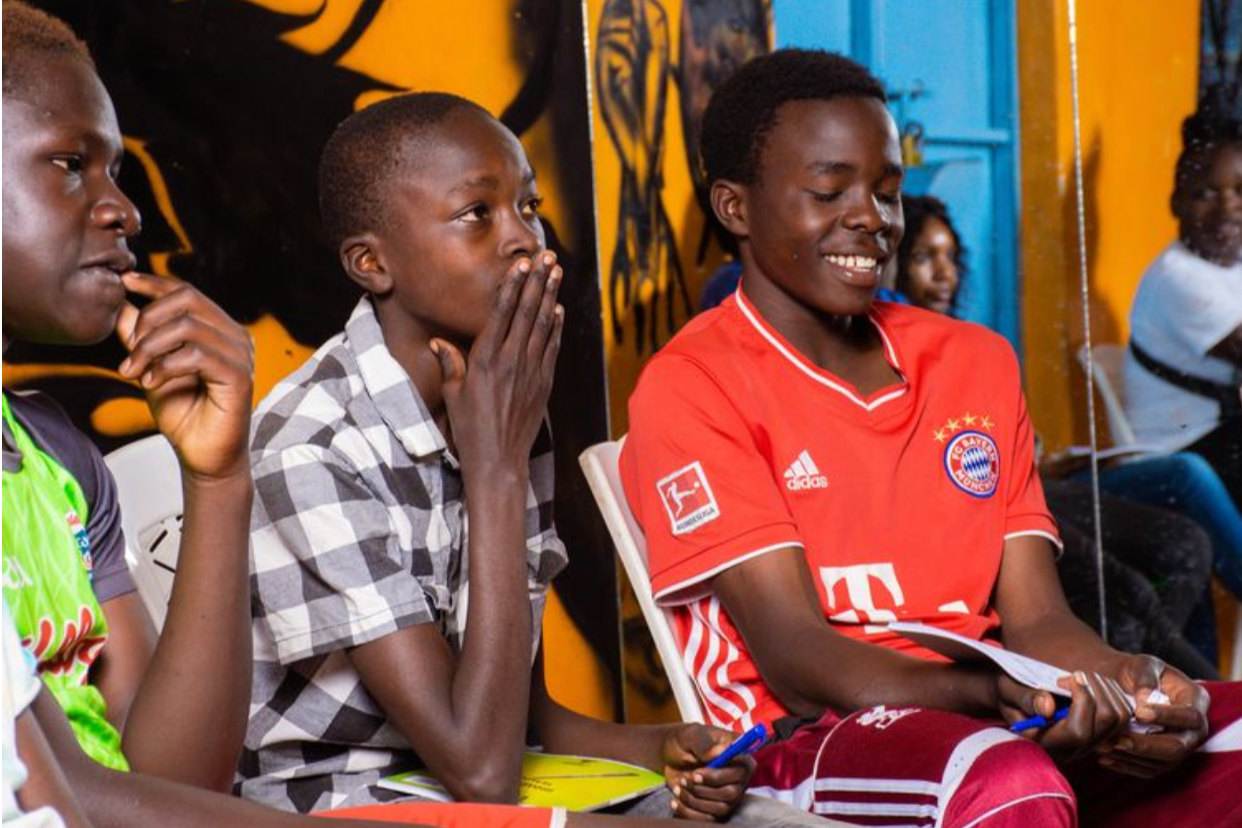
Faith and the project team helped carry forward Invisible Wounds, Kawangware Peace and Mental Health Forums in Kawangware and Riruta, Nairobi, Kenya. The initiative created art-based dialogue spaces for refugees, host community members, and local stakeholders to explore trauma, stigma, coexistence, and community healing. In a community shaped by displacement, poverty, and untreated trauma, the forums offered a rare space for people to speak, listen, and begin building trust. Through two forums at Kivuli Center, 25 participants engaged in documentary screening, guided reflection, facilitated conversation, and art therapy. The documentary helped open the space and set the tone for deeper sharing. Art gave participants another way to express experiences that can be difficult to speak about directly. By the second forum, participants were more open with one another and more willing to name both personal and shared experiences. The project team observed a shift toward trust, empathy, and greater understanding across groups. Plans for signed commitments shifted to informal pledges based on local guidance, and the forums still strengthened relationships and opened a path for continued community engagement. The team hopes to reach additional communities and build partnerships with mental health and psychosocial support providers so participants can access care and referrals beyond the dialogue space.
Re-Imagining New Communities
Kenya | Grace
-
Grace led Re-Imagining New Communities in Kenya through two connected efforts, Children-Led Community Peace Labs and Faith for Peace. The initiative supported children and young learners in developing empathy, compassion, respectful communication, teamwork, leadership, and conflict resolution. Rooted in the belief that children can help shape more peaceful communities, the project invited young people to speak, create, listen, and lead in ways that were age-appropriate and meaningful. Grace held learning sessions with children from a partner church to explore child participation in faith spaces and why peacebuilding skills matter as children grow spiritually and socially. She also facilitated mentorship sessions with partner schools, supporting Children-Led Community Peace Labs across six schools. Through surveys, interviews, and observation, Grace and school patrons observed stronger confidence, improved self-expression, and reduced peer conflict. Lab patrons reported that learners were increasingly choosing dialogue and communication over harmful peer behavior. Children also role-played conflict resolution approaches, helping them connect peace practices to real-life situations in school and community settings. The heart of the initiative was its child-led approach. Children were treated as active contributors to peace in their own environments. Grace plans to continue by strengthening school partnerships, expanding the Peace Labs to additional schools, and training teacher patrons and youth peer leaders.
Breathe Play Grow
Kenya | Grace, Sam, Samantha
-
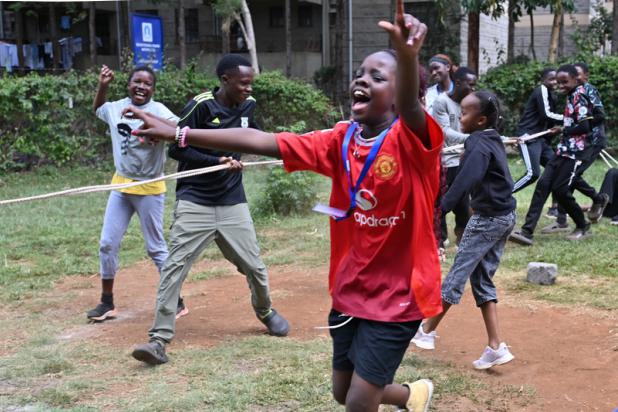
Grace, Samantha, and Sam collaborated on Breathe Play Grow, a two-day sports wellness training camp for 24 teenagers in Kenya. The workshop brought together young people involved in sports and invited them to connect physical activity with mental health, personal leadership, teamwork, responsibility, and peace. The project grew from the shared desire to create a space where young people could move, learn, reflect, and build confidence together. Grace and Sam carried out the activities, with Samantha supporting early planning and safeguarding considerations. Through movement, reflection, and practical learning, participants explored confidence, self-esteem, teamwork, and how personal wellbeing can shape the way they relate to others. The sports-based format made the session accessible and engaging for teenagers, helping them connect peace practice with everyday choices, peer relationships, and team dynamics. Participants reported greater confidence and stronger understanding of personal leadership and responsibility. The partners hope to integrate the model into ongoing school and community programs, supported by youth volunteers, teacher patrons, and peer leaders.
Promoting Peace & Leadership Among Women and Youth
Malawi | Daniel & Jaqueline
-
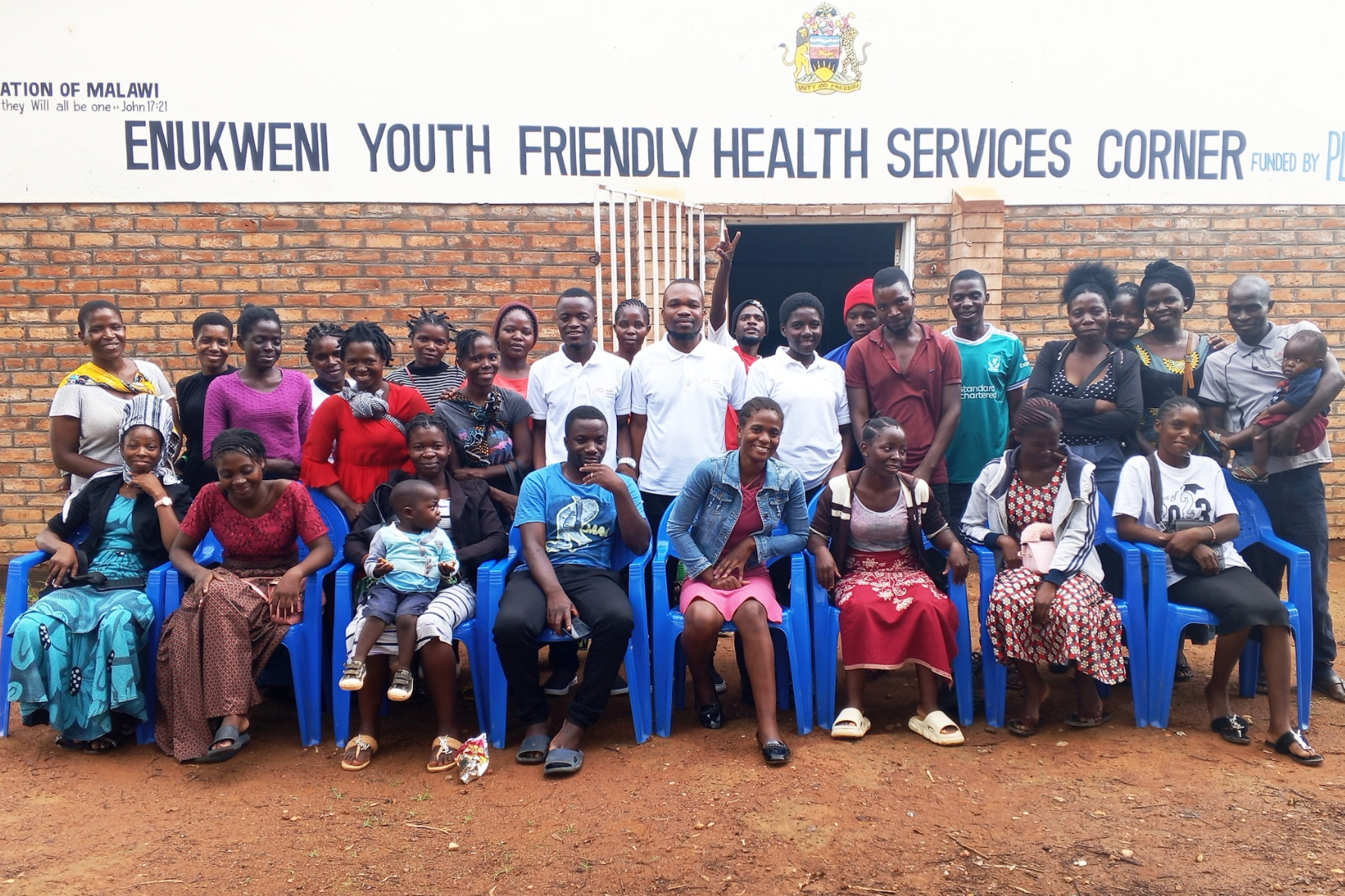
Daniel and Jacqueline led Promoting Peace and Leadership Among Women and Youth in Enukweni, Mzimba District, Malawi. The initiative focused on peacebuilding practices, community trust, mental health, and addressing gender-based harm. In a community where concerns around harm in the home and accountability affect trust, the project created space for women, youth, leaders, and chiefs to learn together and discuss practical ways to strengthen safety and care. The initiative began with a stakeholder meeting to introduce the purpose of the project, followed by trainings for women, youth, community leaders, and chiefs. In total, the project directly engaged 35 participants, including 22 women and 11 youth. The presence of chiefs helped ground the work in local leadership and showed the community that these conversations mattered. Participants shared that the trainings helped them better understand peaceful problem-solving, community trust, and the importance of seeking support when harm happens in the home. Youth participants reflected on moving away from reactive responses and toward more peaceful ways of handling disagreement. Women participants showed increased awareness that harm at home should be addressed through care and support. Several chiefs shared that the training was the first of its kind in the area and invited the team to bring similar sessions to future chiefs’ council gatherings. Daniel and Jacqueline hope to continue by reaching more villages and schools and forming school-based PPA clubs.
Community Peace Circles and Nonviolent Communication in Bonny Island
Nigeria | Okechukwu
-
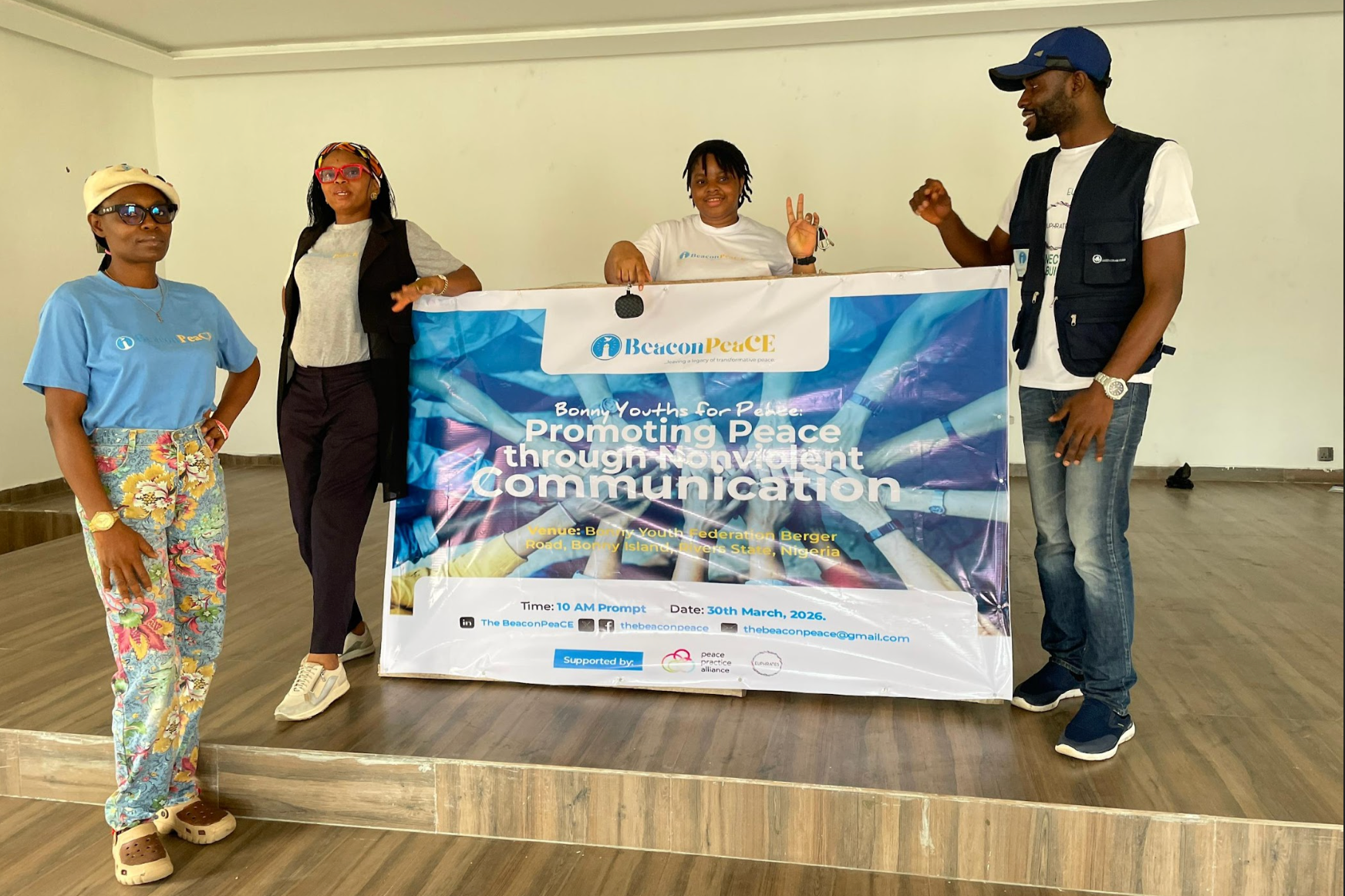
Okechukwu led Community Peace Circles and Nonviolent Communication in Bonny Island, Rivers State, Nigeria, building on BeaconPeaCE’s previous community engagement work. The initiative brought nonviolent communication and peace education into schools and youth leadership spaces across the island. It reached more than 3,700 students and teachers through school-wide peace sensitization sessions across three schools. It also trained 117 students through focused nonviolent communication workshops and engaged 34 youth leaders representing the 34 houses or village communities of Bonny Island. Three school-based peace circles were established to continue sharing peace practices within school communities. Through interviews, participant reflections, and observation, Okechukwu saw strong interest in applying nonviolent communication to real community and family conflicts. One youth participant recognized that a workshop activity mirrored an ongoing family dispute and shared that he planned to bring the principles learned back to his household. A student also expressed interest in sharing the lessons with the wider school community. Okechukwu hopes to continue by working with volunteers, the Bonny Youth Federation, and the Bonny Youth Leaders Council, while seeking additional support to broaden the project across more schools and local communities.
Supporting Teenage Girls in Confidence, Safety, and Self-Respect
Nigeria | Eunice
-
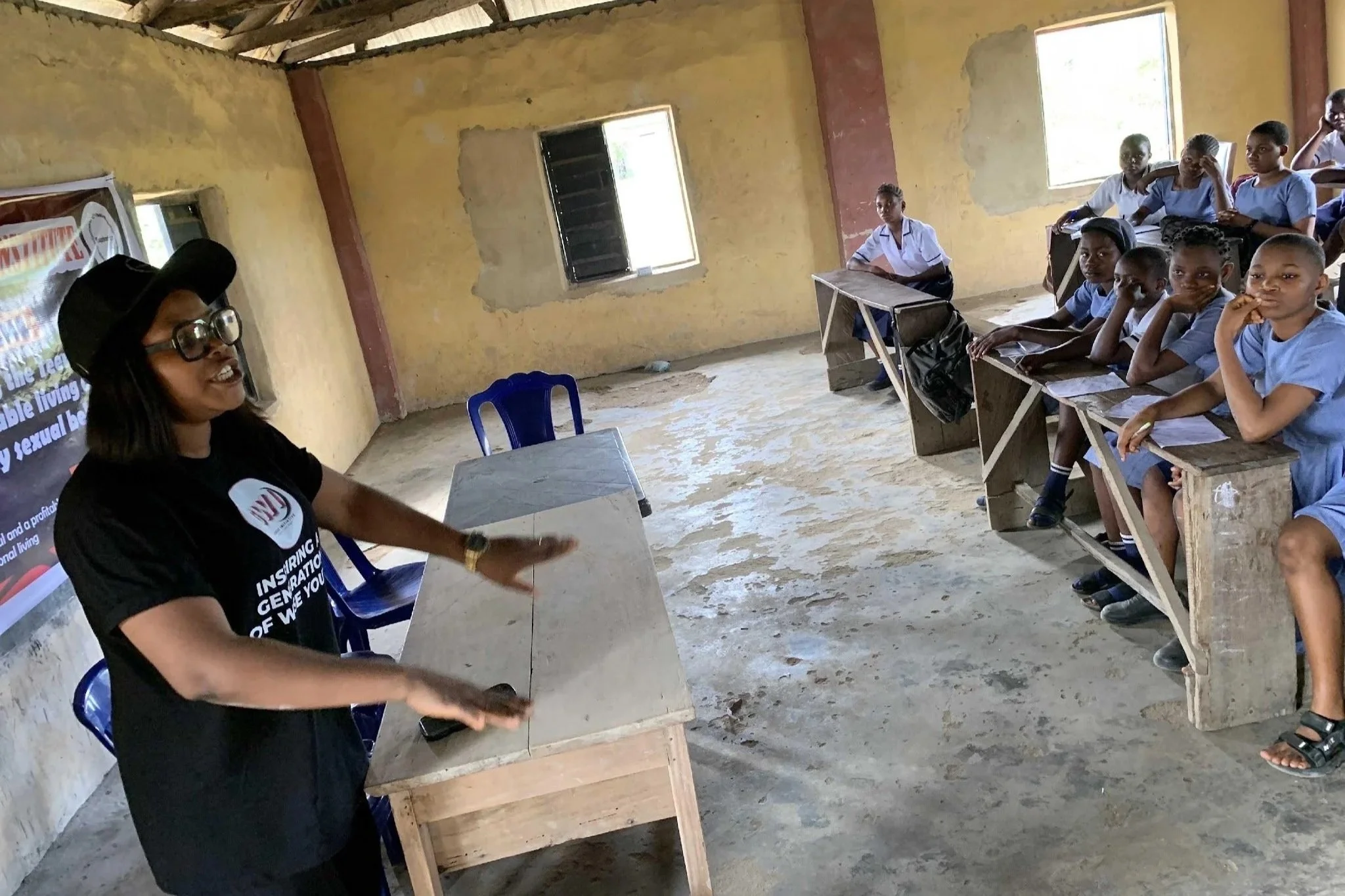
Eunice led Empowering the Teenage Girls for Profitable Living and to Avoid Risky Sexual Behaviours in Abak Local Government, Akwa Ibom State, Nigeria. The workshop brought together 100 teenage girls for an interactive session on confidence, self-respect, personal safety, and positive decision-making. The project created a caring space where girls could ask questions, speak honestly, and be listened to without judgment. Through open discussion, questions and answers, games, and guided facilitation, the girls explored topics connected to self-worth, boundaries, safety, and healthy choices. Eunice observed meaningful changes in self-awareness and confidence, with many participants sharing that the workshop helped them better understand their worth and feel more prepared to make healthy decisions. One participant opened up about a past experience of sexual abuse by a male teacher and shared that what she heard during the workshop helped her begin a healing process. Seventy participants reported greater understanding of the topics covered, and 50 reported increased confidence in applying what they learned. Eunice hopes to continue the initiative with volunteers and additional funding, building on the confidence and trust created through the first workshop.
Move for Positive Change
Nigeria | Evelyn
-
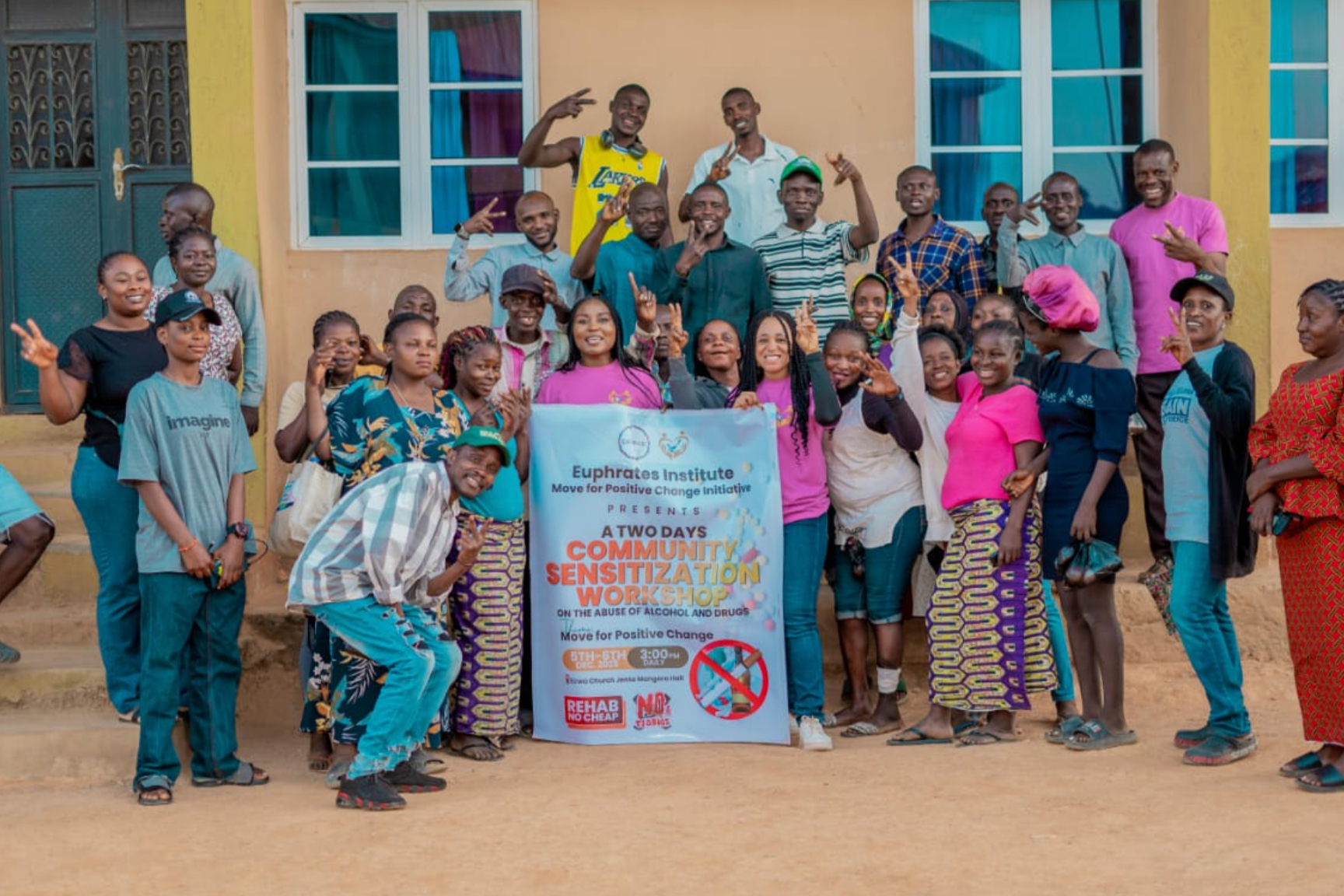
Evelyn led Move for Positive Change in Jos, Nigeria, focusing on trauma awareness, personal peace, self-awareness, self-care, active listening, compassionate communication, and the effects of substance and alcohol use on youth and community life. The initiative directly engaged 104 participants, including youth, women, educators, faith leaders, community leaders, and local stakeholders. The sessions created space for participants to speak honestly about emotional wellbeing, personal choices, and healthier relationships. Many participants were learning about inner peace and self-care for the first time. Youth participants, including those affected by substance and alcohol use, shared their experiences and reflected on the deeper needs behind harmful coping patterns. Compassionate communication helped participants think about how words, tone, body language, and listening can shape relationships. Evelyn also saw signs of the learning moving beyond the workshop. During a follow-up visit, one participant shared that she had welcomed and encouraged someone struggling with alcoholism who had previously felt rejected. Insecurity, school closures, and limited stakeholder engagement affected the reach of the project. Evelyn hopes to continue through schools, churches, mosques, parent-teacher groups, and wider youth networks.

Shaping Leaders Through Learning and Peacebuilding
Nigeria | Ogechi
-
Ogechi led Shaping Leaders through Learning and Peacebuilding in Magboro Owode Local Government Area, Ogun State, Nigeria. The initiative supported secondary school students through a blend of educational assistance and trauma-informed care. The project responded to the reality that many students facing family or community stress also need practical support to stay engaged in school. After engaging school authorities, parents, and local stakeholders to identify vulnerable students, the project provided learning materials, uniforms, partial tuition assistance, and workshops on trauma awareness, emotional wellbeing, and peacebuilding. The initiative directly reached 100 secondary school students, along with teachers and community members. Teachers observed that some students who had previously been withdrawn became more attentive, participatory, and confident in classroom and group activities. Parents and teachers also noted improved communication, reduced aggression, and a stronger sense of responsibility toward school. Approximately 85 students reported greater understanding of trauma awareness, emotional wellbeing, and peacebuilding, while 80 reported increased confidence in managing emotions, relating peacefully with others, and making positive daily choices. Ogechi hopes to continue through stronger school partnerships, trained volunteers, community youth leaders, and long-term support from education and peacebuilding partners.
Grounding Peace Leaders through Personal Peace Practice
Somalia | Abdullahi
-
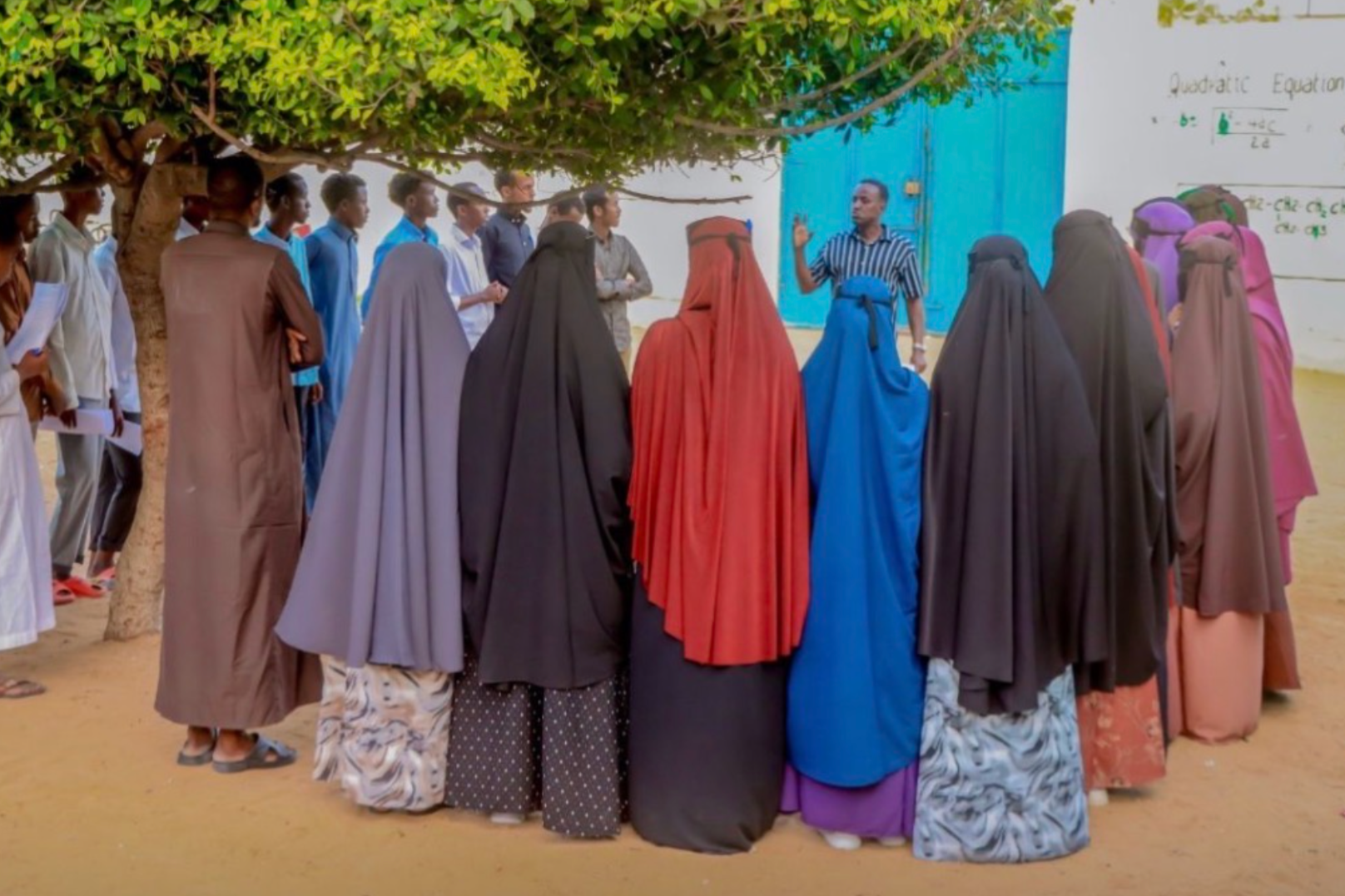
Abdullahi led Grounding Peace Leaders through Personal Peace Practice in Somalia, engaging young leaders and community members in a two-day peacebuilding and leadership program in the Lower Shabelle Region. The initiative directly reached 102 participants, including 55 girls and women. Through interactive workshops, dialogue sessions, and reflective learning activities, participants explored personal peace, emotional resilience, conflict transformation, inclusive leadership, effective communication, and community engagement. The project helped participants strengthen their understanding of how personal peace practices can support wider community peacebuilding. Participants demonstrated improved communication, stronger leadership skills, greater civic engagement, and increased commitment to peaceful dialogue and social cohesion. Fifty-nine participants reported greater confidence in applying what they learned, especially in personal peace practice, conflict resolution, communication, and community peacebuilding. Abdullahi hopes to continue by engaging volunteers and alumni participants as peer mentors, while seeking additional funding and partnerships to expand community outreach, follow-up mentorship, and ongoing personal peace practice sessions.
Path to Peace
Uganda | Peace & CHarity
-
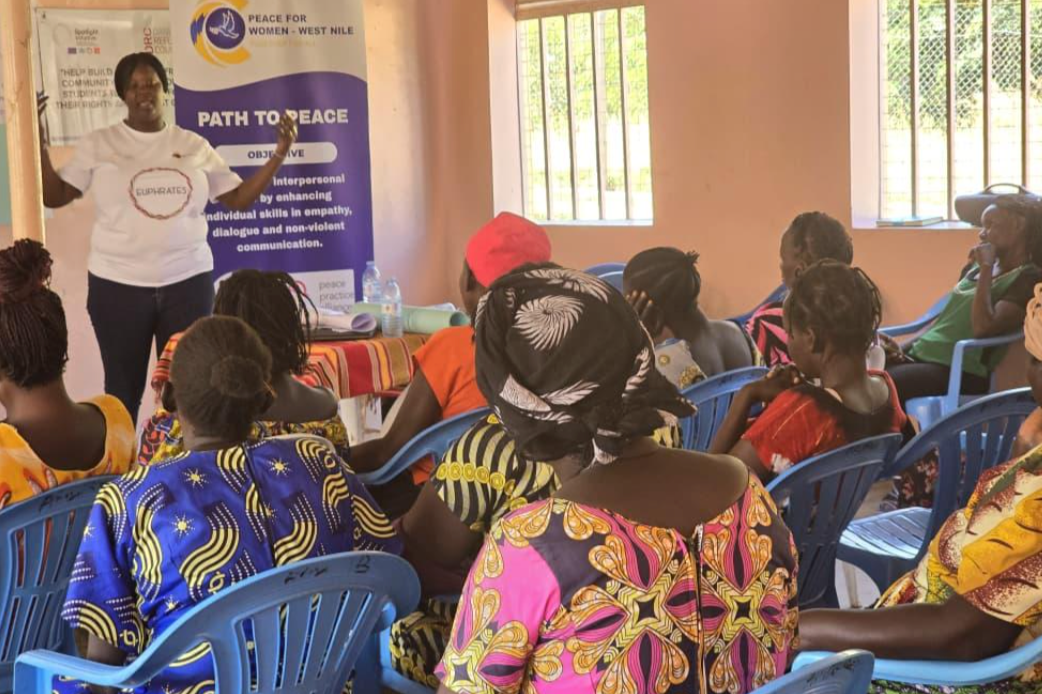
Peace and Charity led Path to Peace in Arua City and Rhino Camp Refugee Settlement in Uganda, focusing on interpersonal peace among women and refugee youth. Through personal peace sessions, nonviolent communication trainings, community dialogues, and psychosocial support, the initiative reached 145 participants, including 85 women and girls and 60 youth. Many participants began by describing peace as the absence of fighting, quarrelling, or conflict. By the end of the sessions, their understanding had grown to include forgiveness, self-esteem, emotional regulation, compassion, healthy boundaries, and respectful communication. Participants shared that they were listening more carefully, speaking more calmly during household disagreements, and recognizing that peace begins within the individual. In Rhino Camp, the dialogues helped strengthen connection among refugees from different backgrounds, creating space for people to listen, share, and support one another. The team plans to continue by training peace champions, forming peacebuilding clubs in refugee settlement and host community schools, and seeking additional support for women and girls, including practical skills training such as reusable sanitary pad making.
Bake for Peace and Prosperity
Uganda | Sharitah
-
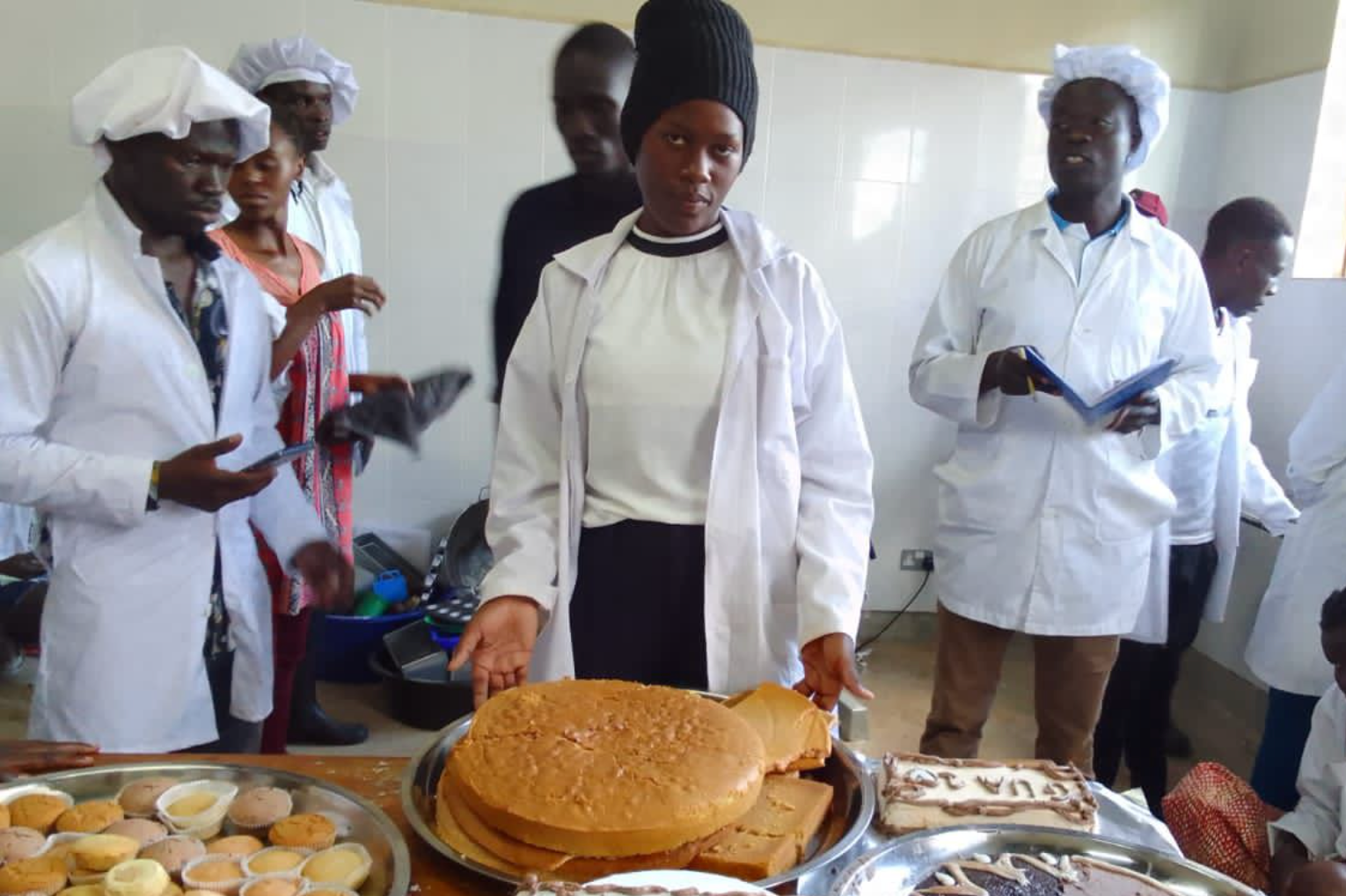
Sharitah led Bake for Peace and Prosperity, A Community Bakery Initiative in Hoima City, Uganda, bringing together livelihood skills, community care, and peacebuilding. The project began with listening, as Sharitah visited women in the community, heard their stories, and worked with them to identify products that could sell locally. She then secured equipment, ingredients, and use of a community hall, where local bakers and a training assistant supported participants in learning baking techniques, hygiene practices, simple business skills, packaging, pricing, and selling. The initiative directly engaged 30 participants, including young women, older women, male youth, and community leaders. Monthly reflection sessions became just as important as the baking itself, giving women space to share challenges, celebrate progress, and support one another. One young woman who had dropped out of school began managing packaging and pricing and shared, “For the first time in my life, I feel like I can do something. I feel like I matter.” Participants reported earning small yet meaningful income, contributing to household needs, and experiencing greater respect at home. Sharitah plans to continue by reinvesting bakery income, working with volunteers, and seeking additional funding to train more women.
Brown Girls Call for Peace
Pakistan | Ayiza
-
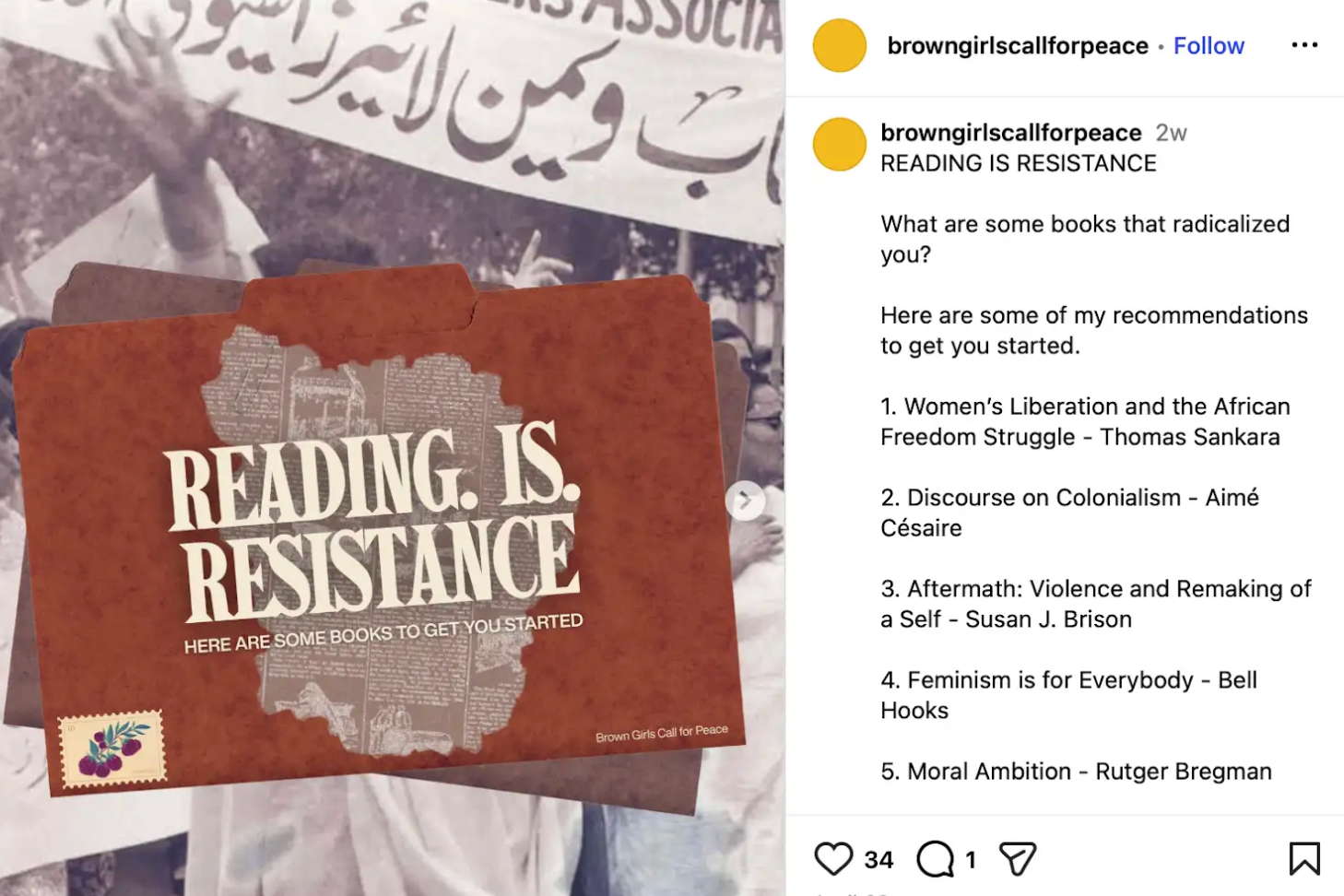
Ayiza began Brown Girls Call for Peace, a developing online and future in-person initiative focused on systems change, women’s rights, and peace. During the reporting period, she created an Instagram page, shared five pieces of content, secured the Brown Girls Call for Peace domain name, established an official email address, and prepared materials for a first workshop. The initiative is still in an early stage, yet it has already helped Ayiza build credibility, connect with activists and changemakers, and become clearer about how to begin from where she is rather than trying to copy the scale of larger organizations. Through social media and informal outreach, the project reached a small early audience of 22 followers and contacts, with most engagement coming from women and young adults ages 18 to 34. Ayiza shared that personal outreach had the greatest effect because it showed her that people working for change are often willing to connect with new efforts rooted in sincerity and care. She plans to continue by developing small toolkits and zines, hosting virtual sessions, building the website, and reaching out to women leaders and activists for interviews and shared learning.
YoutH Rights & Community Dialogue
Southeast Asia
-
In a country in Southeast Asia, this initiative created culturally grounded spaces for young people, families, elders, local leaders, and community partners to discuss child protection, youth rights, leadership, advocacy, and cultural preservation. The project opened careful conversations around sensitive community practices in a way that honored local identity, language, and community leadership, inviting participants to consider how care for young people and respect for cultural identity can move together. Through orientation sessions, legal awareness activities, youth forums, community dialogues, coordination meetings, social media advocacy, and localized information materials, participants explored child protection and youth rights through language and examples connected to their own lives. The initiative directly engaged approximately 150 participants, including women and girls and youth. Youth participants who were initially quiet began asking questions about their rights and futures, and parents, elders, teachers, and local leaders showed growing openness to conversations that had often been difficult to raise. The project created space for learning, trust-building, and shared responsibility across generations, with hopes to continue through youth volunteers, stronger partnerships, localized materials, social media campaigns, and additional support to reach more communities.